
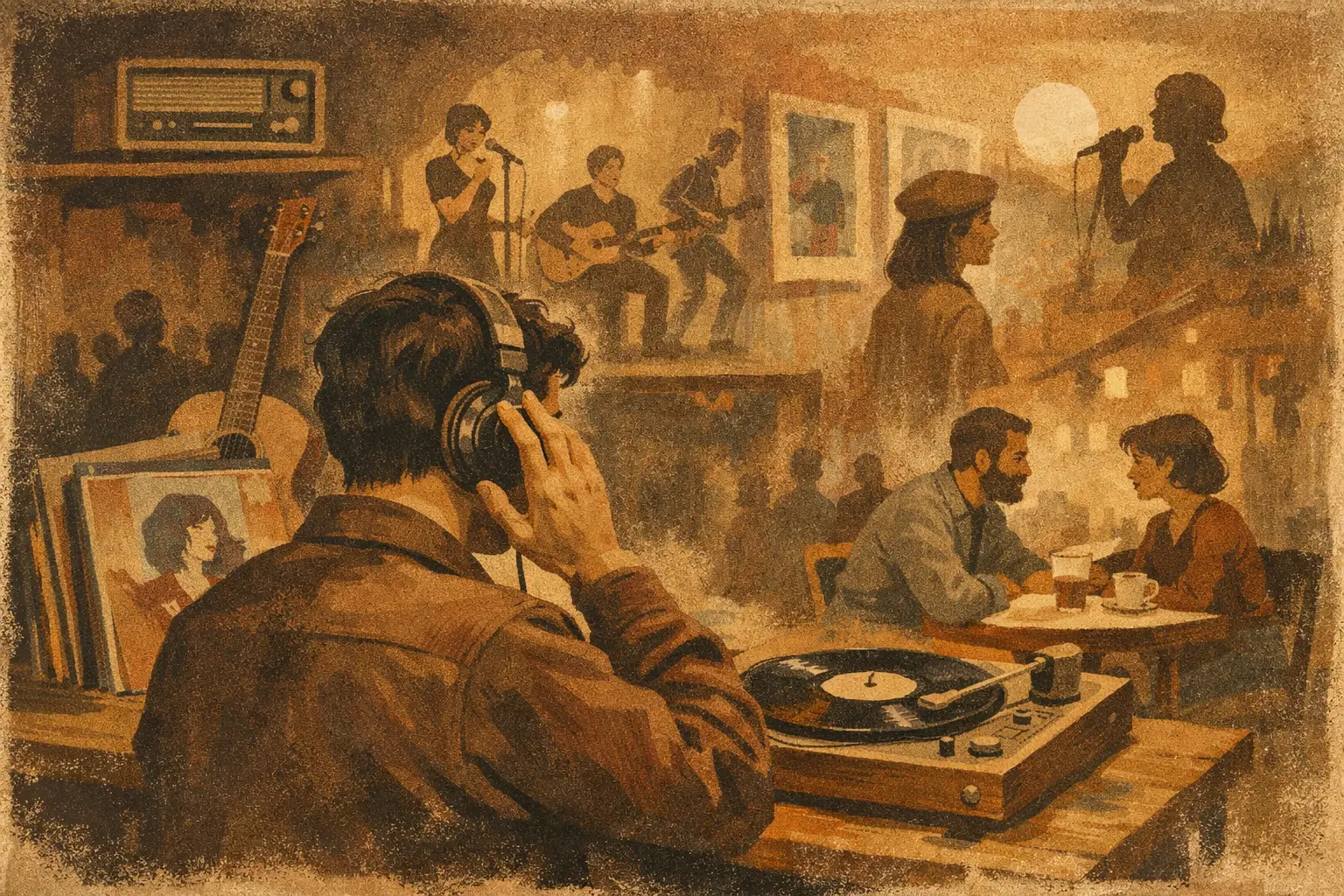
The best answer to where to discover alternative artists is not one platform or one playlist. It is a listening habit. Alternative music rarely arrives with a flashing sign or a massive marketing budget. The records that stay with you tend to appear through a late-night recommendation, an opening act that exceeds expectations, or a songwriter whose catalog feels like a private world waiting to be entered.
For listeners who value character over chart position, the search is part of the experience. A great alternative artist may have a small but devoted audience, a visually distinct body of work, and songs that take more than one listen to reveal their depth. That is not a drawback. It is often where the real connection begins.
Start With the Music You Already Return To
Your existing listening history is one of the strongest discovery tools available. Rather than searching broadly for “new alternative music,” begin with an artist, album, or song you already trust. Look at related artists, listener-created radio stations, producer credits, tour lineups, and collaborators. These paths tend to lead somewhere more personal than a generic genre label.
Pay attention to the details that make a favorite track work for you. Is it the tension between a raw vocal and electronic production? The guitar tone? The cinematic atmosphere? The writing that leaves space for interpretation? Once you can name the qualities you respond to, recommendations become more useful. “Alternative” covers a wide territory, from stripped-down singer-songwriters to noisy guitar records, dream-pop textures, post-punk intensity, and experimental pop.
Streaming services can be excellent starting points, especially when used with intention. Algorithmic suggestions improve when you save full albums, revisit songs, and skip music that does not fit. The goal is not to train an app to deliver more of the same. It is to use it as a map toward artists with a related emotional or sonic language.
Where to Discover Alternative Artists Beyond the Algorithm
Algorithms are convenient, but they often favor what is already gaining momentum. Independent music discovery becomes more rewarding when you balance platform recommendations with places where artists control the context around their releases.
Bandcamp is especially valuable for album-minded listeners. Artists can present complete projects, bonus material, liner notes, merchandise, and direct purchase options in one place. The experience encourages you to spend time with a release instead of treating it as another item in an endless feed. Its genre tags are useful, but following labels, fans, and artists with strong taste can be even better.
YouTube offers a different kind of discovery. A live session, a low-budget performance video, or a visualizer can reveal whether an artist has a genuine point of view. Some musicians are most compelling when you can see how they inhabit a song, not only hear a polished studio version. Search for live performances, studio sessions, acoustic takes, and independent music channels that feature emerging acts.
Social platforms can also lead to worthwhile music, though they require a little patience. Short clips are not a substitute for a song, much less an album. Use them as an introduction, then listen to the full release before deciding whether the artist belongs in your rotation. The strongest artists will have more to offer than a fifteen-second hook.
Follow Independent Labels and Curators With a Point of View
A thoughtful independent label can function like a trusted record store clerk. Labels often bring together artists connected by an aesthetic, a region, a production approach, or a willingness to take risks. If you find one release that feels essential, explore the rest of that label’s catalog.
The same is true of independent radio hosts, DJs, writers, and playlist curators. Their value is not simply that they know what is new. It is that they can place a song in context. The right curator may connect a current artist to the post-punk records, folk traditions, electronic experiments, or classic rock instincts that helped shape the sound.
Be selective. A playlist with thousands of tracks may offer variety, but it can flatten every artist into background noise. Smaller collections built around a clear mood or musical idea tend to be more revealing. Look for curators who update with care and who seem interested in complete work rather than momentary trends.
Go Where Artists Build Real Community
Local venues remain one of the most direct ways to encounter alternative artists before a wider audience catches on. An opening set can be unpredictable, and that is exactly the point. You may hear a new artist in a room where the sound is imperfect, the crowd is still arriving, and the performance has no safety net. When the songs cut through anyway, you have found something worth following.
Check bills at independent theaters, clubs, coffeehouses, record stores, art spaces, and small festivals. Do not only attend shows by artists you already know. The support act is often the best reason to arrive early. Even if a performance does not immediately connect, you will learn more about the local scene and the sounds developing around it.
Regional discovery matters because music scenes still shape artists. Providence, Rhode Island, for example, has long supported musicians working outside the obvious commercial lane. In any city, a community of venues, engineers, visual artists, promoters, and fellow bands can influence a record as much as a genre classification does.
Record stores offer another form of human discovery. Staff recommendations, listening stations, event flyers, and used-bin finds can send you toward artists you would never encounter through a search bar. Ask for a recommendation based on a specific record you love, not a vague request for something “alternative.” The more precise the conversation, the better the result.
Listen to Albums, Not Just Introductions
Alternative artists often make their strongest case across a sequence of songs. A single may be the entry point, but an album reveals pacing, contrast, lyrical themes, and production choices that cannot be reduced to one track. Give a promising artist enough time to establish their world.
Try a simple rule: when you find one song you like, listen to at least three more. Choose the newest release, an older track, and a live performance if one is available. This quickly shows whether the artist has range and whether the song you found represents a larger identity.
It also helps to listen in the right setting. Some music belongs in headphones after midnight. Some records need a long drive, a focused stereo session, or the quiet space to read lyrics and absorb the arrangement. If a song does not land immediately, that does not always mean it lacks value. It may simply be asking for more attention than the moment allows.
Support the Artists You Want to Keep Hearing
Discovery has more impact when it becomes support. Following an artist, saving an album, sharing a song with someone who will actually listen, attending a show, or buying music directly can help sustain the work. For independent musicians, these actions are not abstract gestures. They help create the conditions for the next recording, the next video, and the next tour.
Direct support also changes the relationship with the music. When you purchase an album or join an artist’s mailing list, you are stepping outside the disposable cycle of passive streaming. You are choosing a longer connection with an artist’s work and allowing that work to keep developing on its own terms.
Artists such as Nick Duane build their catalogs around original compositions, emotional vocals, alternative textures, and a commitment to music that lasts beyond a single release cycle. That kind of artistic identity is easier to recognize when listeners make room for the full catalog, not just the first song placed in front of them.
Build a Discovery Practice That Feels Personal
The best music discovery routine does not need to be complicated. Set aside one listening session each week for an artist you do not know. Follow one label or curator whose taste challenges your own. Arrive early at shows. When a song catches your attention, resist the urge to move on immediately and spend time with the record behind it.
Taste becomes more interesting when it is actively shaped. You do not need to chase every release or agree with every recommendation. You only need to stay curious enough to let unfamiliar sounds earn a place in your life. Somewhere beyond the obvious feed, an artist is making the record you will wish you had heard sooner.