
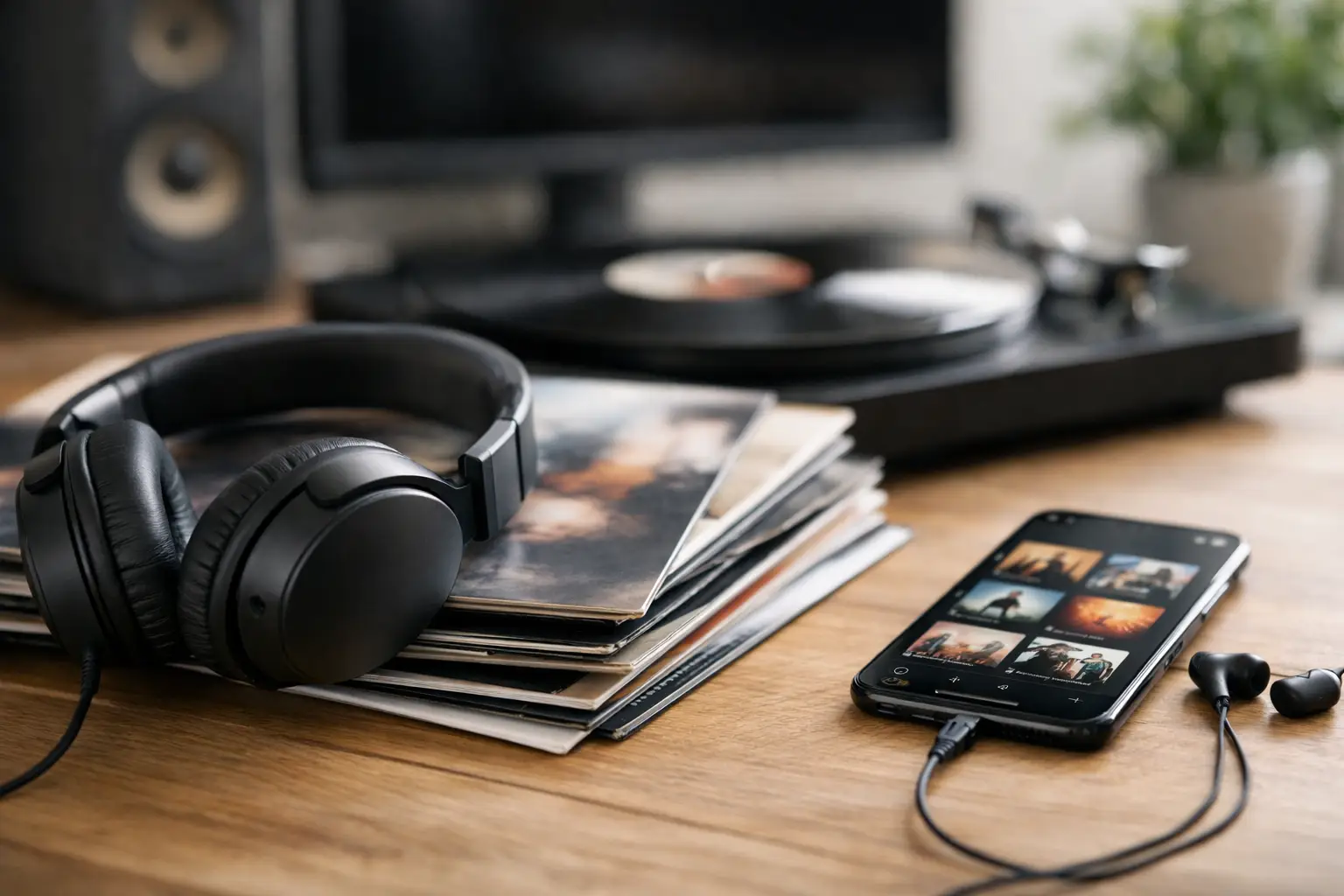
You can burn an hour scrolling and still come away with nothing memorable. That is the real problem behind how to discover new albums – not access, but signal. There is more music available than ever, yet truly finding a record you want to live with for weeks still takes intention.
For listeners who care about full-length releases, this matters. An album is not just a container for tracks. It is pacing, mood, narrative, contrast, texture, and voice. If your taste leans indie, alternative, singer-songwriter, art rock, or cinematic music, the best discoveries rarely come from passive listening alone. They come from learning where depth still lives.
How to Discover New Albums Without Relying on Luck
The fastest way to improve your hit rate is to stop searching by genre alone. Genre tags are useful, but they flatten too much. “Indie rock” can mean intimate acoustic confessionals, guitar-driven anthems, lo-fi experiments, or polished alternative records with electronic detail. If you only search by label, you will miss the emotional traits that actually guide your taste.
Start instead with three qualities you know you respond to. Maybe you want haunting vocals, spacious production, and strong melodic writing. Maybe you prefer raw guitars, reflective lyrics, and records that feel cohesive front to back. Once you identify those patterns, you can evaluate new albums by feel, not just by category.
This also helps you avoid the endless stream problem. Platforms are built to keep music moving. Great albums often ask for the opposite. They need a little room. If you want records that stay with you, search with more precision and listen with more patience.
Follow artists, not just playlists
Playlists are convenient, but they are usually built for momentum, not immersion. They can introduce a song, yet they rarely explain why an artist matters or whether an album holds together as a complete statement.
A better move is to treat one great song as a doorway. If a track catches you, go straight to the album it came from. Then look at that artist’s earlier and later releases. Pay attention to how their sound develops. Listeners who build their discovery habits around artists rather than playlists tend to find records with more personality and staying power.
This is especially true in independent music, where the album often remains the real canvas. Many artists still shape releases as complete experiences, even when the streaming economy pushes singles. That is where originality tends to reveal itself.
Use the “related but not identical” rule
Recommendation engines are good at serving close neighbors. They are less reliable at showing you the next artist you will deeply care about. If you only click the most obvious suggestions, your taste can narrow without you realizing it.
Try a small shift. When you find an artist you love, look for musicians who share one trait, not all of them. If you love the atmosphere but want stronger hooks, move in that direction. If you love the songwriting but want more sonic experimentation, search there. This creates more surprising discoveries than chasing carbon copies.
The trade-off is simple. Similarity gives comfort. Partial overlap gives growth. If you want new albums that genuinely expand your world, partial overlap usually wins.
Build Better Sources for New Album Discovery
Finding better albums often comes down to building a better input system. If the only source feeding your listening life is an algorithm, you will hear what performs well inside that system. That does not always line up with artistic depth.
Streaming platforms still have value, especially for convenience. Release radar, artist radio, and editorial recommendations can surface worthwhile records. But they work best when you actively train them. Save full albums, follow artists you actually revisit, and skip songs that clearly miss the mark. Passive behavior creates generic results.
YouTube can be stronger for discovery than many people admit, especially if you watch live sessions, full album streams, studio performances, and interviews. Video reveals context. You get a sense of artistic intent, not just sound. For album-oriented listeners, that context often determines whether a record feels disposable or essential.
Bandcamp remains one of the best places to discover independent albums with identity. It is less optimized for frictionless background listening and more oriented toward active exploration. That difference matters. Records there often come with artwork, notes, credits, and a clearer sense of authorship. If you care about supporting artists directly, it also creates a more meaningful path from discovery to commitment.
Social platforms can help too, but only if you use them selectively. Follow artists, labels, small curators, and serious listeners whose taste consistently aligns with yours. Ignore hype accounts that treat music like a trend cycle. The goal is not more recommendations. It is better recommendations.
Learn to read the signals around an album
A strong album usually leaves clues before you ever hit play. Look at the release pattern. Is the artist building a body of work or chasing isolated moments? Read how they describe the record. Do they speak in vague marketing language, or do they communicate a point of view? Notice the visuals, titles, and sequencing. Cohesive artists tend to think cohesively.
None of this guarantees you will love the music, but it improves your odds. Albums worth revisiting often come from artists who know what they are making and why.
That is one reason independent catalogs can be rewarding. When an artist has a distinct voice and a clear sense of identity, you can feel it in the presentation as much as the songs. Nick Duane Music, for example, speaks to listeners who want original work shaped by craft, emotion, and a long-view artistic mindset rather than formula.
How to Discover New Albums That Match Your Mood
Taste is not static. The album you need on a late-night drive is not the same one you want on a Sunday morning or after a long week. One reason people think they are not finding good records is that they are evaluating music in the wrong emotional frame.
Instead of asking, “Is this good?” ask, “Is this right for this moment?” Some albums are immediate. Others open slowly. Some belong in headphones. Others need speakers and space. Matching context to mood can completely change how a record lands.
Create a few private categories for yourself. Not genres – situations. Night records. Writing records. Storm records. Walking records. Records for when you want lyrical clarity. Records for when you want pure atmosphere. This gives your discovery process shape and helps you recognize what kind of album you are actually looking for.
It also keeps you from dismissing subtle work too quickly. A quiet, cinematic record may feel underwhelming in a distracted afternoon but become unforgettable at midnight.
Give albums a real first listen
If you want to know how to discover new albums well, you have to accept one uncomfortable truth: many great records do not reveal themselves in 30 seconds. Hooks matter, but so do transitions, sequencing, restraint, and emotional arc.
Give a promising album at least three songs in order before deciding. Better yet, give it one uninterrupted listen. If something still feels flat, move on. But if even one track keeps pulling your attention back, the album may deserve another pass.
There is always a trade-off here. You do not want to force yourself through music that clearly is not for you. At the same time, if you skip too fast, you will mostly reward music designed for instant reaction. The albums that stay with you for years often ask for slightly more trust upfront.
Turn Discovery Into a Personal Archive
The best music listeners are not just consumers. They are curators of their own experience. If you keep finding albums and then forgetting them, the issue may not be discovery at all. It may be retention.
Keep a short running note of records you want to revisit. Not a giant database. Just a living list of albums that showed potential. Add one sentence about each release – what caught your ear, what mood it fits, what artist it connects to. Over time, patterns become obvious.
This is where your taste gets sharper. You start noticing whether you prefer tension over polish, intimacy over scale, analog warmth over digital precision, or storytelling over abstraction. Once you understand those preferences, discovering the next great album gets easier.
And just as important, it gets more personal. You stop listening according to what the culture tells you is essential and start building a catalog that actually reflects your emotional life.
The best new album is not always the loudest release, the most promoted name, or the one dominating playlists for a week. More often, it is the record that meets you at the right moment, speaks in a voice that feels lived-in, and keeps revealing more each time you return. Find more of those, and your listening life gets a lot richer.