
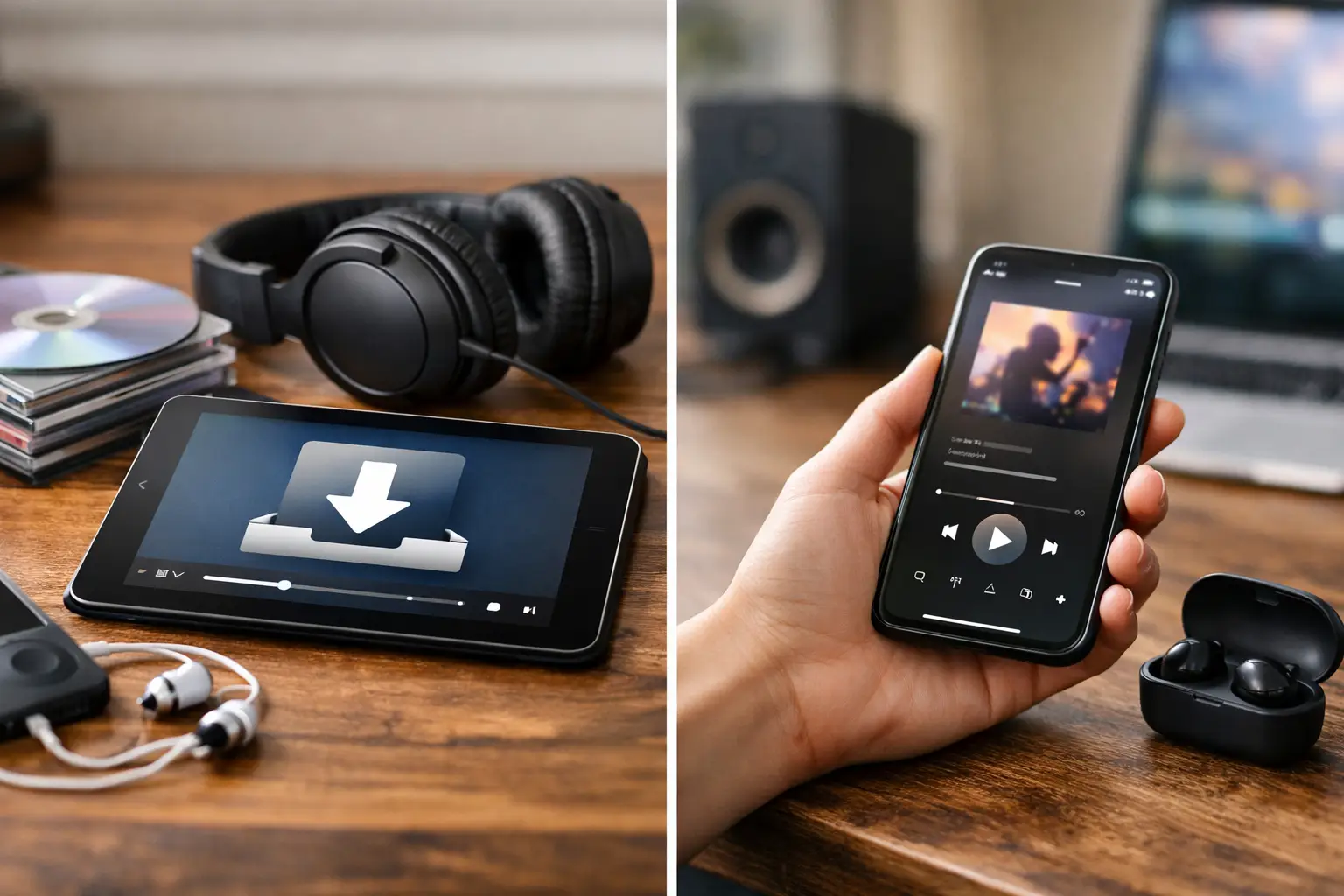
You hear a song on a streaming platform, save it, replay it for a week, and then wonder whether it belongs in your actual collection. That question sits at the heart of digital downloads vs streaming. For listeners who care about more than background noise – people who still value albums, lyrics, production choices, and a real connection to the artist – the difference is not technical trivia. It changes how music is experienced, supported, and remembered.
For independent music in particular, format is part of the relationship. Streaming makes discovery easy. Downloads make commitment visible. Neither one is automatically better in every situation, and that is exactly why this conversation matters.
Digital downloads vs streaming: what really changes?
At a glance, both formats give you music without a physical CD or vinyl record. But they create very different habits. Streaming is access. Digital downloads are ownership, or at least the closest digital version of it.
When you stream, you are paying for entry into a vast catalog. That catalog feels endless, which is part of the appeal. You can move from an indie rock record to an ambient soundtrack to an acoustic singer-songwriter release in seconds. It is fast, flexible, and built for curiosity.
When you buy a download, the experience becomes more deliberate. You chose that album or track because you wanted it enough to keep it. That changes the psychology of listening. Downloads tend to live in your personal library, not in an algorithm’s rotating feed. They often get more intentional listening time because they were acquired with purpose.
For fans of original, emotionally driven music, that distinction is not small. Some records are made to soundtrack a commute. Others are made to stay with you. Streaming is excellent at opening the door. Downloads are often what happens when a record actually means something.
Why streaming dominates everyday listening
Streaming won because it removed friction. You do not have to think about storage, file transfers, or whether your laptop still has the album you bought five years ago. The song is there, the playlist is there, and the recommendation engine is always trying to hand you the next discovery.
That convenience matters. For many listeners, streaming is the modern radio, record store, and personal jukebox rolled into one. It is especially useful for people who like to explore widely, follow new releases every Friday, or keep music playing throughout the day without making a ceremony out of each choice.
There is also a social dimension. Streaming platforms are where many fans first encounter independent artists. Songs get shared in playlists, recommended by the platform, and circulated through social media clips, YouTube performances, and artist profiles. For a professional recording artist building a long-term audience, streaming offers visibility that downloads alone cannot match.
Still, convenience has a cost. Streaming can flatten the listening experience if you let it. Albums become interchangeable tiles. Tracks compete for attention inside giant libraries designed for speed, not always depth. If you care about sequencing, sonic atmosphere, and the emotional architecture of a full release, streaming can feel a little too disposable.
Why digital downloads still matter
Downloads have been written off too quickly. They remain one of the clearest ways for a listener to say, this music deserves a place in my collection.
That matters artistically and financially. A purchased album carries a different weight than a stream. It signals support, not just passive consumption. For independent artists, direct purchases can mean far more than fractions of a cent accumulated over time. If you want to support music that values originality over formula, buying a download is still one of the strongest moves you can make.
Downloads also offer a kind of permanence that streaming cannot guarantee. Catalogs change. Rights shift. Songs disappear from platforms. A favorite version can be replaced, edited, or made temporarily unavailable. If you own the files, that album remains part of your world regardless of platform decisions.
There is also the issue of focused listening. Fans who buy music often spend more time with what they bought. They notice the details – the layered guitars, the vocal textures, the tension between analog warmth and futuristic production. In other words, they hear the craftsmanship. That is a major reason downloads still resonate with listeners who value albums as complete artistic statements.
Digital downloads vs streaming for indie artists
For independent artists, this is not a theory debate. It affects sustainability.
Streaming is essential for reach. It helps new listeners discover a catalog, sample a sound, and decide whether to follow an artist’s journey. If you are building an audience across the US and Europe, streaming platforms are often the first point of contact. They create momentum, visibility, and repeat exposure.
But downloads and direct purchases often carry more economic and emotional value. They can help fund future recordings, videos, promotion, and touring. More importantly, they reflect a deeper level of fan investment. Someone who buys music is not just listening. They are participating in the artist’s longevity.
That is why many independent artists use both. Streaming brings people in. Direct downloads give serious listeners a way to support the work with more intention. This hybrid model fits artists who care about reach without reducing their catalog to disposable content.
For a brand like Nick Duane Music, where originality, cinematic atmosphere, and long-term artistry are central, that balance makes sense. Streaming allows discovery. Direct purchase gives committed listeners a more lasting way to engage with the music.
Which is better for the listener?
It depends on how you listen.
If you love discovery, make playlists constantly, and want instant access to a wide range of music, streaming is probably your main format. It is efficient and built around exploration. For many people, it is the easiest way to maintain a living, evolving relationship with music.
If you return to favorite albums for years, care about owning what you love, or want your support to land more directly with an artist, downloads have a stronger case. They are especially valuable for listeners who see music as more than utility. If an album feels personal, owning it can feel like the right response.
There is also a middle ground that many serious music fans already practice, even if they do not name it. They stream first, then buy what lasts. That model reflects real listening behavior. Not every song needs to be purchased. But the records that become part of your identity often deserve more than a spot in a playlist.
The emotional difference between access and ownership
Music is emotional, but platforms shape how those emotions are held.
Streaming gives you immediacy. You can chase a mood at any moment. Late-night headphones, long drives, winter walks, a new release on a Friday morning – streaming serves all of it well. It meets the moment.
Downloads create a stronger sense of personal archive. They say this album is not just available to me, it is mine to revisit. That feeling still matters, especially for music that marks a season of life, a relationship, or a personal turning point.
For fans of indie rock, alternative textures, and singer-songwriter work with real atmosphere, ownership can deepen connection. It turns listening from temporary access into a more conscious act of keeping. That may sound subtle, but anyone who has carried a favorite record across years knows the difference instantly.
So what should fans do?
Use streaming for breadth. Use downloads for depth.
Let streaming introduce you to artists, new songs, and records you might have missed. It is unmatched for discovery and day-to-day listening. But when an album truly stays with you, consider buying it. That choice supports the artist more directly and gives the music a more permanent place in your life.
The smartest answer to digital downloads vs streaming is not choosing one side as if music fans have to pledge allegiance. The real answer is knowing what each format is good at. Streaming is excellent for access and momentum. Downloads are powerful for commitment and preservation.
If music matters to you beyond convenience, the format should reflect that. Some songs are fine as a stream. The ones that become part of your story are worth keeping.