
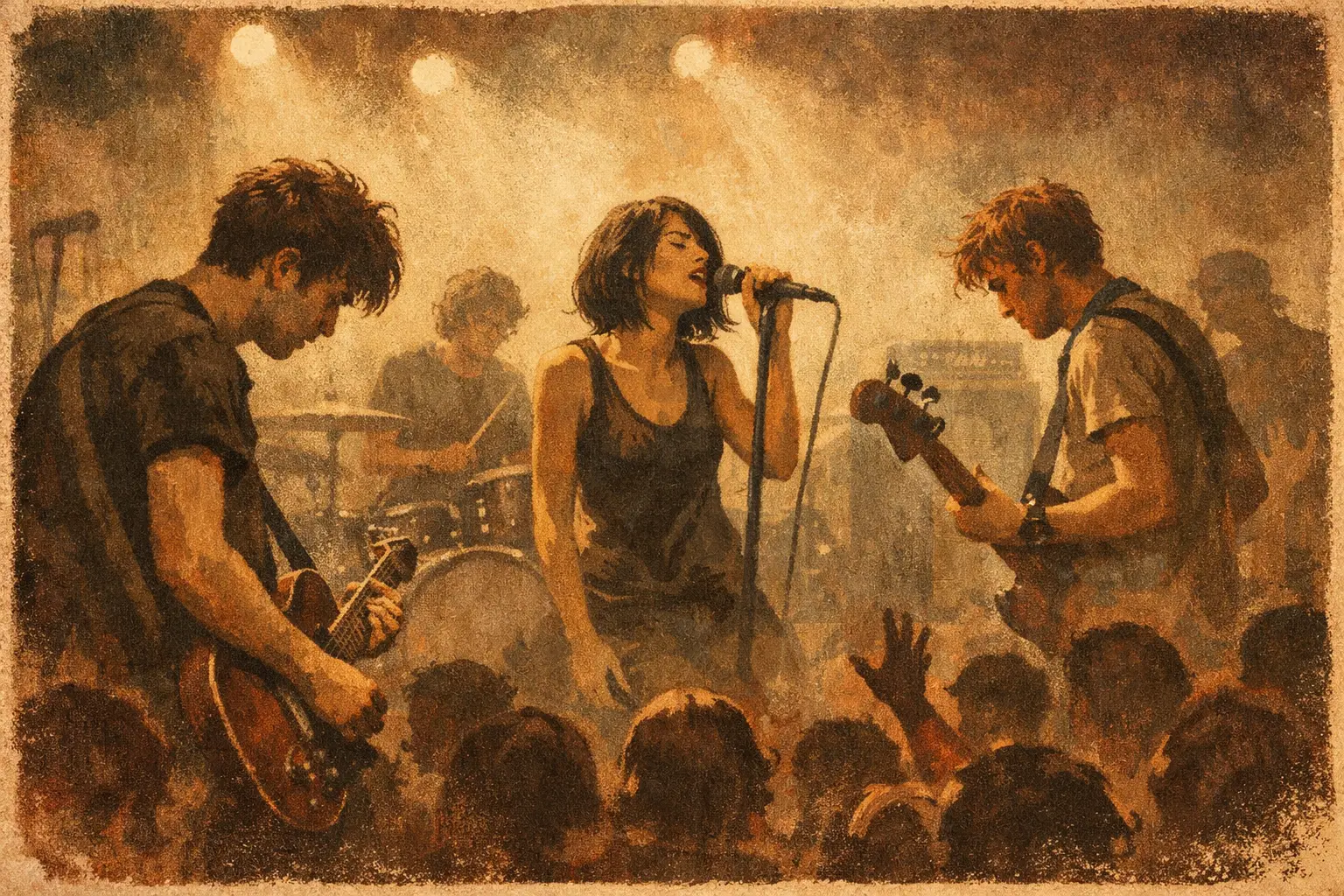
A lot of music scenes claim they changed everything. The alternative rock movement actually did. It did not just give listeners a new playlist category. It shifted the center of gravity in popular music by making space for risk, imperfect beauty, and voices that sounded human rather than manufactured.
That shift still matters. If you listen for mood, identity, and songwriting that leaves a mark, you are already hearing the aftershock. The artists carrying that spirit forward are not chasing formulas. They are building worlds, blending textures, and making records that feel lived in.
What the alternative rock movement really changed
Before alternative became a market label, it was a stance. It meant stepping outside the polished expectations of mainstream rock and major-label predictability. The sound was never one thing. In one corner, there was jagged guitar tension and basement-club urgency. In another, there were dreamy layers, introspective lyrics, and songs that felt cinematic long before that word became a branding shortcut.
What connected these artists was not uniform style. It was intent. They made room for contradiction. A track could be melodic and abrasive, vulnerable and defiant, stripped down and sonically adventurous at the same time. That complexity gave listeners something more durable than a trend. It offered identity.
For fans, the appeal was immediate. Alternative rock felt less like a product and more like a signal. It told people they were allowed to want depth, atmosphere, and emotional realism from guitar music. That remains one of the movement’s biggest achievements.
The sound of the alternative rock movement
Trying to reduce alternative rock to a checklist misses the point, but there are traits that keep resurfacing. Guitars matter, but not always in the traditional hero-riff sense. Sometimes they shimmer. Sometimes they scrape. Sometimes they create a wall of unease that supports a vocal rather than competing with it.
Rhythm sections often carry more emotional weight than they get credit for. The bass can be hypnotic, moody, and melodic. Drums can sound loose and immediate or tightly controlled and mechanical depending on the song’s emotional frame. Production choices are equally important. Alternative records often leave in texture, air, and friction. That roughness is not a flaw. It is part of the language.
Vocals are another defining piece. The alternative tradition has always made room for singers who sound distinct before they sound technically perfect. A voice with grain, tension, restraint, or fragility can carry more truth than a spotless performance. For listeners who care about authenticity, that difference is everything.
Why it broke through
The alternative rock movement did not rise because one sound suddenly won. It broke through because audiences were ready for music that felt less controlled. In the late 1980s and 1990s, a lot of listeners were tired of overprocessed presentation and familiar arena-rock excess. Alternative offered contrast. It was more intimate, more unpredictable, and often more emotionally direct.
There was also a cultural factor. College radio, indie labels, regional scenes, and word-of-mouth discovery gave this music a path before mainstream media fully understood it. That matters because alternative rock was built from communities first and categories second. It earned credibility in smaller spaces before larger platforms tried to package it.
Once major audiences caught on, the tension began. Exposure helped incredible records reach more people, but success also created pressure. When the industry realized alternative could sell, it started flattening the term into a broad commercial bucket. That trade-off never fully disappeared. Greater visibility brought opportunity, but it also blurred the difference between genuinely adventurous music and safe imitations wearing alternative aesthetics.
More than grunge, more than a decade
One of the biggest misconceptions is that alternative rock begins and ends with a few famous bands from the 1990s. Grunge was a major chapter, but it was never the whole book. Alternative includes post-punk edge, shoegaze atmosphere, indie-rock intimacy, art-rock ambition, and countless hybrids that do not sit neatly on a retail shelf.
That range is exactly why the movement lasted. It was flexible enough to evolve without losing its core values. As technology changed, artists absorbed electronic textures, cinematic production, ambient space, and more experimental structures. Some records leaned raw and guitar-driven. Others sounded widescreen and immersive. Both approaches belonged because alternative rock has always been defined as much by spirit as by instrumentation.
This is also why album-oriented listeners still come back to it. The best alternative records create a full emotional environment. They reward attention across a sequence, not just in isolated singles. That approach feels especially powerful now, when so much music is optimized for instant reaction instead of long-form connection.
Why independent artists still carry the torch
If the original movement stood for individuality, then independent artists are some of its strongest modern heirs. Not because every indie release is automatically daring, but because independence still creates room for a clearer artistic identity. Without heavy pressure to fit a trend cycle, artists can follow tone, narrative, and sonic curiosity where the songs need to go.
That matters for listeners who want more than background noise. When an artist builds music around atmosphere, emotional detail, and a recognizable point of view, the result tends to last longer. It may not dominate a chart in a single weekend, but it has a better chance of becoming part of someone’s life.
This is where the alternative rock movement still feels alive rather than archival. You hear it in artists who merge classic songwriting with modern production, who care about albums as experiences, and who treat music as craft instead of content. Nick Duane Music exists in that lane – original songs, alternative textures, and a direct connection to listeners who value substance over formula.
The movement’s influence on modern listening
Even listeners who do not identify as alternative fans are shaped by what this movement normalized. It opened the door for emotional directness in rock-adjacent music. It made it acceptable for records to sound strange, intimate, or unresolved. It expanded the idea of what a serious artist could be.
Streaming changed how people find music, but it did not erase the hunger for identity-driven work. If anything, it made curation more important. In a crowded digital landscape, music with a real voice stands out faster. Listeners can hear the difference between a song made to satisfy an algorithm and one made with conviction.
That does not mean every alternative-inspired artist should reject accessibility. Some of the best records in this tradition are highly melodic and immediately memorable. The point is not obscurity for its own sake. The point is honesty in choices. A hook means more when it comes from a distinct artistic center.
What listeners still want from alternative rock
They want songs that hold tension without collapsing into noise for show. They want melody with weight behind it. They want lyrics that suggest a real internal life, not empty posturing. They want production that enhances emotion instead of polishing it out of existence.
Just as importantly, they want a reason to stay. In a disposable music economy, staying power is rare. Alternative rock at its best earns repeated listening because it leaves room for discovery. A new detail in the arrangement. A vocal line that lands harder after a long week. A lyric that changes meaning as your own life changes.
That kind of connection does not happen by accident. It comes from artists who trust listeners enough to make something personal, textured, and complete.
Where the alternative rock movement goes next
It will keep changing shape, and that is healthy. Any movement dies when it becomes a museum piece. The future of alternative rock will likely keep pulling from electronic production, cinematic arrangement, analog warmth, and digital experimentation all at once. Some artists will push toward minimalism. Others will build dense sonic architecture.
The real test is not whether the guitars are loud enough or the mix sounds vintage enough. It is whether the music still carries the movement’s deeper promise – originality, emotional weight, and the courage to sound like no one else. That is what drew people in from the start, and it is still what separates lasting work from empty style.
For listeners, the opportunity is simple. Keep choosing music with a pulse, a point of view, and a sense of craft. The alternative rock movement was never just about rejecting the mainstream. It was about proving that honest, inventive music can outlast whatever happens to be popular this month.