
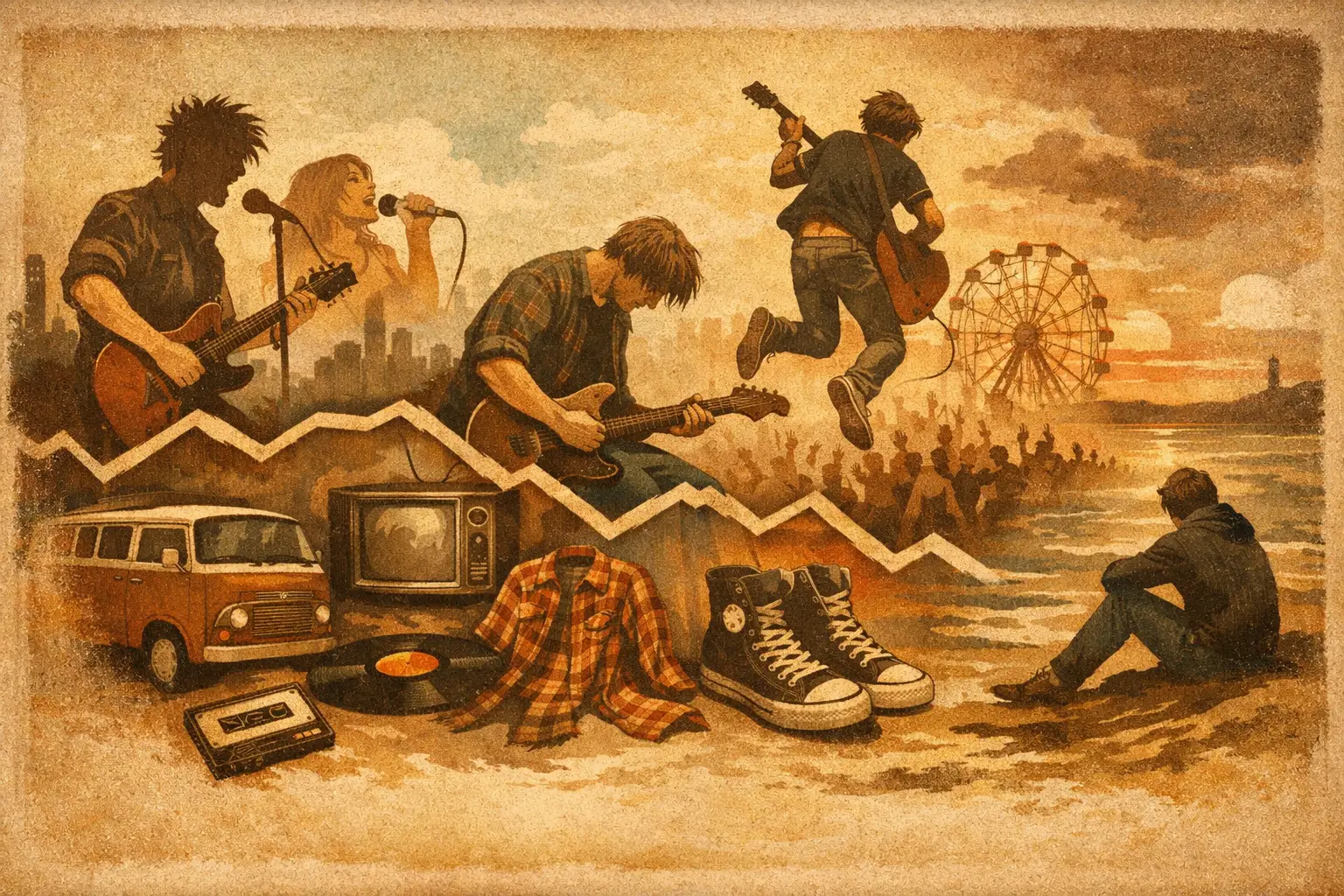
A true alternative rock history timeline does not begin with a corporate label meeting or a polished radio format. It starts in basements, college towns, art spaces, and small clubs where artists pushed against the polished excess of mainstream rock and made room for something stranger, sharper, and more honest. That tension between independence and visibility is what gave alternative rock its identity – and what still gives it power.
For listeners who care about originality, alternative rock has always offered more than a style. It is a lineage of artists who chose mood over formula, texture over trend, and conviction over mass approval. The sound changed decade by decade, but the core idea stayed remarkably intact.
The alternative rock history timeline begins in the late 1970s
The roots of alternative rock reach back to the post-punk and college rock movements of the late 1970s and early 1980s. Punk had already stripped rock down to urgency and attitude, but post-punk expanded the palette. Bands started experimenting with mood, angular guitar work, minimalist rhythms, and a darker emotional tone. This was not arena rock. It was art-minded, independent, and often deliberately anti-commercial.
At the same time, underground American acts were building communities outside the major-label machine. College radio became one of the most important channels for discovery. Instead of waiting for commercial stations to approve a song, listeners found bands through student-run programming, fanzines, and local scenes. That ecosystem mattered because it rewarded distinct voices.
Groups like R.E.M., The Replacements, Hüsker Dü, and Sonic Youth helped define this early era in different ways. R.E.M. brought melodic mystery and jangling guitars. Hüsker Dü fused punk intensity with emotional songwriting. Sonic Youth leaned into noise, dissonance, and experimental structure. None of these bands sounded exactly alike, and that is the point. Alternative rock was less a fixed sonic recipe than a shared refusal to fit neatly inside existing categories.
The 1980s built the underground framework
By the mid-1980s, alternative rock had become a recognizable network even if it was not yet a mainstream business category. Independent labels were essential. They gave artists room to release records that major labels might have considered too rough, too introspective, or too unconventional. Scenes in places like Athens, Minneapolis, Boston, and New York each added their own character.
This period also introduced one of the genre’s lasting trade-offs. The more visible alternative rock became, the more it risked losing the outsider credibility that made it compelling in the first place. Some fans wanted the music to remain underground. Others believed strong songwriting deserved a larger audience. That tension would follow the genre for decades.
The late 1980s also saw the rise of bands that would bridge underground credibility and broader cultural reach. Pixies, Jane’s Addiction, and The Smiths each contributed something durable – surreal loud-quiet dynamics, art-rock theatricality, and emotionally literate songwriting. If you hear modern indie rock balancing abrasion with melody, there is a good chance these artists are somewhere in the bloodline.
The 1990s changed everything
If there is a turning point in the alternative rock history timeline, it is the early 1990s. Nirvana’s breakthrough did more than launch a band. It shifted the center of rock culture. Suddenly, music that had developed in independent spaces was dominating radio, MTV, and major-label strategy.
Grunge became the most commercially visible branch of alternative rock, with Nirvana, Pearl Jam, Soundgarden, and Alice in Chains at the front. But the decade was bigger than Seattle. Smashing Pumpkins brought layered ambition and emotional drama. Radiohead pushed art-rock into a more futuristic and psychologically intense space. Beck mixed irony, folk, hip-hop, and lo-fi instincts into something distinctly his own.
This was the decade when alternative became both a sound and a market label, and that created complications. On one hand, artists who would once have remained niche found massive audiences. On the other, the industry began packaging “alternative” as a genre brand, which flattened some of its original unpredictability. The word that once suggested creative resistance started showing up in marketing departments.
Still, the best artists of the era kept the spirit alive by refusing to repeat themselves. Nine Inch Nails folded industrial textures into emotional confession. Pavement made slacker wit sound elegant. Garbage merged rock, electronics, and pop precision. The genre was expanding, not narrowing, even when the business tried to standardize it.
The late 1990s and 2000s split the path
By the late 1990s, alternative rock had fractured into multiple lanes. Some bands moved closer to polished mainstream rock. Others drifted toward experimental electronics, introspective singer-songwriter territory, or garage revival energy. That fragmentation was not a weakness. It was evidence that the genre remained creatively alive.
The Strokes, Interpol, and Yeah Yeah Yeahs helped reignite stripped-down cool in the early 2000s. Their music felt stylish but not empty, rooted in post-punk tension and downtown attitude. At the same time, bands like Coldplay and Keane carried more atmospheric, emotional forms of alternative rock into global popularity. Then there was the rise of acts such as Modest Mouse, Death Cab for Cutie, and The Shins, whose appeal came from lyrical intimacy and indie credibility.
This is where definitions get messy. Some artists were called indie rock, some alternative, some both. It depends on whether you are talking about sound, label status, audience, or era. In practical terms, alternative rock and indie rock often overlapped heavily in the 2000s, but they were not identical. Alternative had become a broader umbrella, while indie still pointed more directly to ethos and release model.
For independent artists, this period mattered because digital platforms started weakening the gatekeeping power of labels and radio. Discovery could happen through blogs, MP3 sharing, and early streaming culture. That shift brought the genre closer to its roots. Artists with a real voice could build audiences without waiting for institutional approval.
2010s alternative rock became more fluid
The 2010s did not produce one dominant alternative rock sound. Instead, the genre became more porous. Bands and solo artists borrowed from dream pop, electronic music, folk, shoegaze, hip-hop production, and cinematic ambient textures. Alternative rock stopped pretending it needed a narrow center.
Acts like Tame Impala, The National, Arctic Monkeys, and Florence + The Machine showed how wide the field had become. Some leaned psychedelic, some literary, some rhythm-driven, some orchestral. The common thread was still artistic identity. The music felt authored, not assembled.
That distinction matters. In a streaming environment built around speed, mood playlists, and disposable content, alternative rock kept rewarding albums, sonic world-building, and emotional continuity. Listeners who wanted more than a quick hook kept returning to artists who treated records as complete statements.
This era also made room for musicians who blended classic songwriting instincts with modern production. That combination remains one of the strongest traits in contemporary alternative music. It respects the past without becoming nostalgic. It pushes forward without sounding trend-chasing.
Where the alternative rock history timeline stands now
Today, alternative rock is less a gatekept scene than a living language. It exists across independent releases, streaming platforms, direct-to-fan communities, and hybrid genres that would have confused older record-store bins. The sound can be guitar-driven, electronic, orchestral, raw, or meticulously produced. What holds it together is intention.
The strongest alternative music still carries the values that shaped the genre in the first place: individuality, emotional truth, sonic character, and a willingness to challenge the expected. For some artists that means lo-fi immediacy. For others it means widescreen production and immersive arrangement. Both can belong if the work feels genuine.
That is why this history still matters. Alternative rock was never just about distortion pedals or flannel or college radio mythology. It created space for artists who wanted longevity instead of trend dependency. It gave serious listeners a place to find music with personality and depth. And for independent musicians building original work today, that lineage is not a museum piece. It is a working foundation.
An artist brand like Nick Duane Music fits naturally into that tradition by valuing atmosphere, originality, and emotionally driven songwriting over formula. That is not nostalgia. That is continuity.
If you follow the alternative rock history timeline from underground scenes to modern streaming culture, one truth stays clear: the genre lasts because it keeps making room for artists with something real to say. The tools change. The platforms change. The need for music with identity does not.