
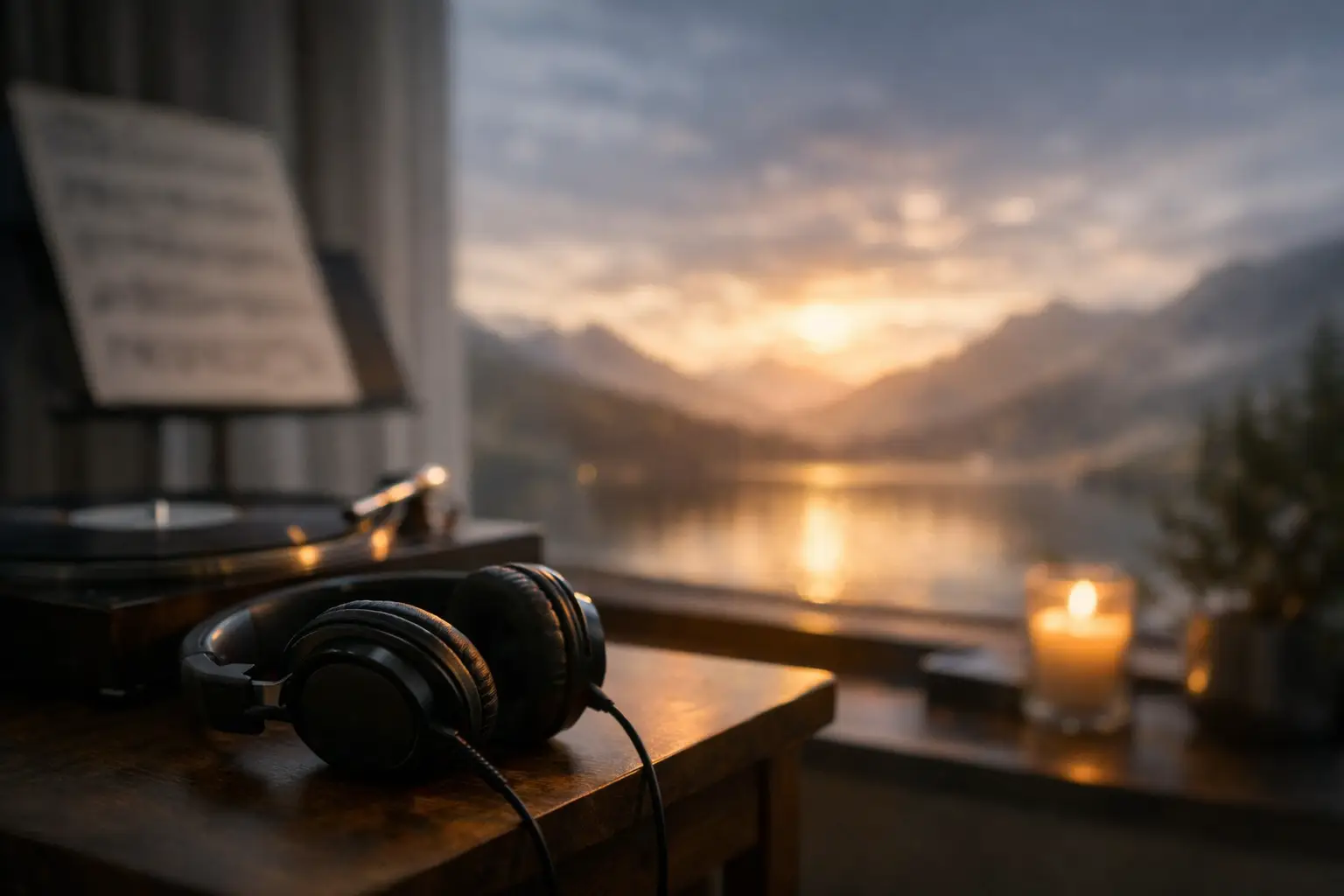
A song can be three minutes long and still feel bigger than a room. The best songs with cinematic atmosphere create their own weather: headlights on wet pavement, an empty highway at 2 a.m., a memory replaying in slow motion. They do not need a film attached to them. The music itself supplies the image, the tension, and the emotional aftermath.
For listeners drawn to indie rock, alternative music, and singer-songwriters with something real to say, cinematic atmosphere is more than a production label. It is the feeling that every instrument has a role in the scene. A vocal does not simply deliver a lyric. It stands at the center of a world.
What Makes a Song Feel Cinematic?
Cinematic music is often mistaken for music with strings, big drums, or a dramatic build. Those elements can help, but they are not the point. A sparse acoustic guitar can feel more cinematic than an oversized arrangement when the recording captures distance, tension, and detail.
The real ingredient is intention. Every choice, from the first second of silence to the final reverb tail, supports a specific emotional frame. The listener is not just hearing a verse and chorus. They are being placed somewhere.
A song may open with a guitar figure that feels isolated and close-miked, then widen gradually as bass, percussion, and ambient texture enter. That movement changes the scale of the experience. A room becomes a landscape. A private thought becomes a moment with consequences.
This is why cinematic atmosphere works so naturally in independent music. Artists outside the pressure of formula can let a song breathe. They can leave space before a chorus, allow an instrumental passage to carry the meaning, or build an arrangement around a mood rather than a playlist-friendly hook.
Space Is an Instrument
The most memorable songs rarely fill every available second. They understand that silence, decay, and restraint create anticipation.
A delayed guitar note can hang in the air like a question. A drum entrance can feel enormous because it was withheld for half a verse. A vocal recorded with the right amount of distance can sound intimate without becoming small. These choices give the listener room to step into the song rather than standing outside it.
Reverb matters here, but more is not always better. An overwashed mix can blur the lyric and reduce impact. The strongest cinematic production uses depth with control. Maybe the lead vocal stays present and human while guitars drift beyond the edges of the speakers. Maybe the snare is dry and immediate against a wide, shadowy backdrop. Contrast is what makes the space believable.
That balance is especially powerful in alternative rock. The raw edge of a guitar or the grain in a voice keeps the music grounded, while atmospheric production gives it scale. The result can feel both classic and forward-looking: a real performance living inside an unfamiliar world.
Tension Matters More Than Size
A song does not become cinematic because it gets loud. It becomes cinematic when it makes the listener wait for something.
That tension can come from harmony, rhythm, lyric, or arrangement. A chord that refuses to resolve can make even a gentle verse feel unsettled. A steady beat beneath a vocal full of doubt creates friction. A lyric that offers one precise image instead of a full explanation allows the listener to complete the scene personally.
Consider the difference between a chorus that arrives immediately and one that is earned. Neither approach is automatically better. A direct hook can hit hard when a song needs urgency. But when the writing calls for suspense, delaying the release can turn a familiar progression into a genuine emotional payoff.
This is the trade-off artists face in production. Too much withholding and a song can feel static. Too much escalation and it can feel predictable. The goal is not to make every section bigger than the last. The goal is to make each change mean something.
The Voice Carries the Camera
In songs with cinematic atmosphere, the vocal often acts like the camera lens. It tells listeners where to look and how close to stand.
A whisper can make a lyric feel confessional. A weathered full-voice performance can make the same words feel like a declaration made after years of silence. Doubled vocals may create a dreamlike unease, while a single exposed take can make the smallest crack in a singer’s delivery feel essential.
Perfection is not always the target. Emotional accuracy matters more. Listeners who love independent artists can hear when a performance has been polished past the point of feeling. A little breath, grit, or instability can carry more truth than flawless phrasing.
That does not mean cinematic vocals should be careless. The performance still needs command. The singer has to understand when to hold back, when to push, and when to let the arrangement carry the weight. The best takes sound lived-in, not merely recorded.
Texture Turns Sound Into Place
Texture is where a song gains its physical world. It may arrive through distorted electric guitar, analog synth, piano noise, bowed strings, field recordings, or a bass tone that feels almost tactile. The source matters less than the emotional job it performs.
A bright, clean guitar can suggest open air or motion. A low synth drone can imply danger before any lyric confirms it. Percussion with a loose, human feel may create the sense of movement through an actual space, while tightly programmed drums can make the scene feel futuristic or psychologically contained.
There is no required palette. An acoustic folk song can be cinematic. So can a noisy garage-rock track. It depends on whether the sonic details serve a shared emotional direction. Adding layers simply to make a mix feel expensive is a dead end. A single unusual sound, introduced at exactly the right moment, can create a stronger image than ten tracks competing for attention.
Why These Songs Stay With Listeners
Cinematic atmosphere gives a song replay value because the listener does not absorb it all at once. On the first listen, the hook or lyric may land. On the next, a distant guitar line or a shift in the drums changes the feeling. Over time, the song attaches itself to real places in the listener’s own life.
That connection is personal. One listener may hear a late-night drive; another may hear the final scene of a relationship. The artist provides the frame, but the audience brings the history. This is why atmosphere can create loyalty more effectively than trend-chasing. It gives people something they can return to when they need a particular kind of space.
For a professional recording artist, that is a lasting standard worth pursuing. Nick Duane Music is built around original compositions where emotionally driven vocals, alternative textures, and cinematic soundscapes can coexist without sacrificing the song itself. The aim is not spectacle for its own sake. It is to make music that feels vivid long after the speakers go quiet.
How to Listen for Cinematic Atmosphere
Try listening to a song once without doing anything else. No scrolling, no conversation, no skipping ahead. Notice what appears first: a location, a color, a face, a season, or simply a feeling of motion.
Then listen again and follow the arrangement. Pay attention to what enters late, what disappears before the chorus, and which sounds feel close versus far away. Often the atmosphere is built from these small decisions rather than one obvious dramatic gesture.
Most of all, trust the response that cannot be neatly explained. If a song makes an ordinary street look different on the walk home, if it gives a private memory a larger frame, it has done its work. The most powerful cinematic music does not ask for a screen. It leaves one playing behind your eyes.