
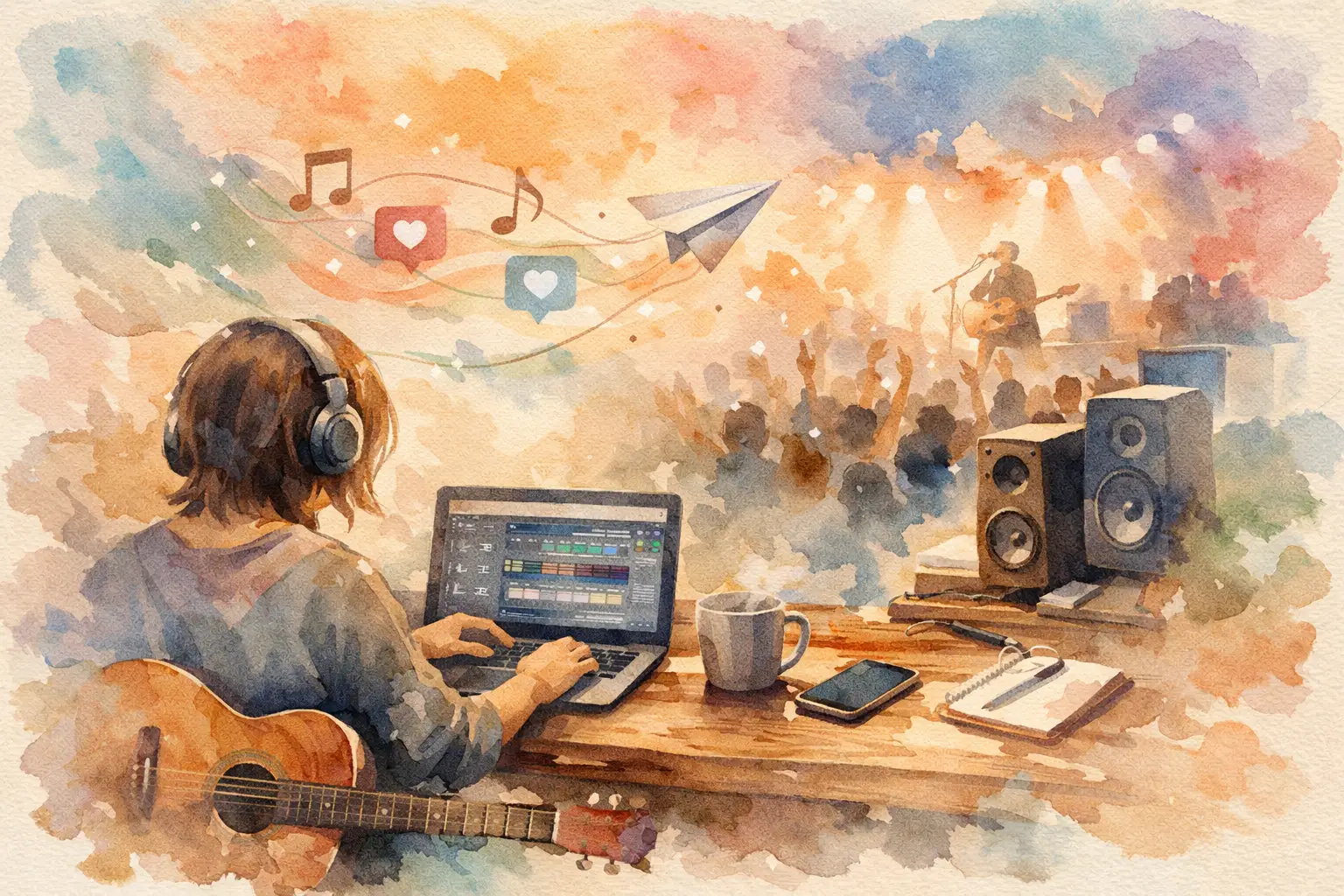
A great song can stop someone in their tracks. But independent music marketing gives that song a path forward – from a first stream to a saved track, a direct purchase, a show ticket, and a real connection with the artist behind it.
For independent artists, the goal is not to imitate a major-label campaign with fewer resources. It is to create a clear artistic world that listeners can recognize, enter, and return to. When the music carries emotional weight, the marketing should carry the same identity.
Start With an Identity People Can Feel
Marketing works best when it reveals what is already true about the music. Before planning posts, release dates, or platform campaigns, define the artistic thread that connects the catalog. This is more than a genre label.
An artist may live somewhere between indie rock, alternative music, singer-songwriter intimacy, cinematic production, and classic melodic songwriting. That range can be a strength, but listeners still need a clear first impression. What emotional space does the music create? Is it nocturnal and reflective, raw and guitar-driven, expansive and atmospheric, or built around timeless vocal melodies?
The answer should shape every public-facing detail: artist photos, album art, short video clips, release copy, live performance visuals, and the language used to introduce songs. Consistency does not mean making every release look the same. It means each release feels like it came from the same creative mind.
Listeners remember artists with a point of view. A polished image may earn attention, but a distinct identity gives people a reason to stay.
Build the Foundation Before Asking for Attention
Every release should have a home base that the artist controls. Streaming platforms are essential for discovery, but they are rented space. Algorithms change, playlists rotate, and a strong month of streams does not automatically create a lasting audience.
An official artist website creates a central destination for music, biography, videos, store items, and direct fan contact. It gives casual listeners a place to understand the larger story and gives committed supporters a way to buy music directly. For album-oriented artists, it can also turn discovery into a more immersive experience through previews, visuals, lyrics, and track-by-track context.
Make the next step obvious. A visitor should never have to guess whether to play an album, watch a video, follow on a preferred platform, or purchase music. Too many choices can weaken action, so lead with the one action that matters most at that moment.
An email list is equally valuable, even if it grows slowly. A listener who chooses to hear directly from an artist is far more meaningful than a passive impression. Use it with care. Send release announcements, personal notes from the studio, early access, and occasional updates that give fans a reason to remain close to the work.
Treat Every Release Like a Story, Not a File Upload
Uploading a single to digital services is distribution. A release campaign is the story that gives the track a life beyond release day.
Start planning four to six weeks before the music arrives. Choose the central idea: the emotional tension in the lyric, the sound of a particular guitar part, a visual world, or the personal origin of the composition. That idea becomes the campaign’s center, not a generic announcement repeated across every channel.
In the weeks before release, share material that creates curiosity without explaining everything away. A short performance clip can show the vocal at its most immediate. A studio moment can show craft and personality. A visual fragment can establish mood. The best pre-release content does not merely say, “New song coming soon.” It gives listeners a reason to want the next piece.
On release day, make it easy to listen and easy to go deeper. Lead with the song, then offer the wider experience: the video, the album page, the direct store, or a note about the writing and recording process. Follow up after release day as well. Many listeners will not see the first announcement, and others need repeated exposure before they press play.
A focused campaign often outperforms a constant flow of unrelated posts. One strong song with a defined visual and emotional angle can build more momentum than several releases that disappear after 24 hours.
Use Platforms for Their Strengths
Not every platform should receive the same content in the same form. The song remains the center, but the doorway changes.
Spotify and other streaming services are useful for frictionless discovery and repeat listening. Keep artist profiles complete, use strong artwork, and organize releases so a new listener can move naturally from a current single into the broader catalog. A track that earns saves, repeat plays, and profile visits is building a stronger signal than one that receives a quick burst of low-intent traffic.
YouTube is especially powerful for artists whose music has cinematic atmosphere or a performance element. A full video, a live session, a lyric visual, and a concise short-form clip can all serve different listeners without feeling redundant. The visual should deepen the music, not distract from it.
Bandcamp and a direct store are where committed listeners can become supporters. These spaces are particularly valuable for full albums, special editions, digital purchases, and fans who want their money to reach the artist more directly. Do not treat direct sales as an afterthought. They are a meaningful expression of listener belief in the work.
Social channels are best used as invitations, not as a daily demand for attention. Share the song’s atmosphere, the making of it, the artistic history behind it, and the moments that feel human. A professional artist can be accessible without turning every post into a performance of availability.
Make Content Serve the Music
The pressure to post constantly has made many artists create content that has little relationship to their actual work. That approach can produce views, but it often attracts an audience that is interested in the clip rather than the songs.
Instead, create a small content system around each release. Record a few high-quality performance moments. Capture a conversation about the writing process. Photograph the recording environment. Pull a lyric that holds tension on its own. Film a visual sequence that reflects the album’s atmosphere. These materials can be used over time, with each one offering a different entry point into the same artistic world.
There is a trade-off here. Trend-based content may travel faster, while more intentional material may grow more slowly. For an artist building a long-term catalog, slower growth is not failure if it brings listeners who return, follow, purchase, and recommend the music to someone else.
Measure What Shows Real Connection
Vanity metrics are easy to find and hard to build a career on. A high view count may be useful, but it does not tell the whole story. Pay closer attention to saves, follows, repeat listeners, playlist additions, video watch time, direct purchases, email signups, and messages from people who connect with a song.
These signals reveal whether attention is becoming relationship. If a song earns streams but few saves, the introduction may be working better than the lasting impression. If a video has strong watch time but does not lead people to the music, the call to action may be unclear. If direct supporters respond strongly to album content, that may be a reason to give future releases more depth rather than chasing shorter formats.
Review results after each campaign, but avoid rebuilding the entire strategy after one disappointing week. Music audiences develop over time. Patterns become useful when measured across several releases.
Independent Music Marketing Is a Long Game
The strongest independent careers are built through repetition with purpose: writing better songs, presenting them with care, making it easy to listen, and giving people a direct way to stay connected. Awards, past projects, live experience, and professional production all add credibility, but they matter most when they support a living artistic identity.
For a professional recording artist, promotion should never feel separate from the work. The same attention that shapes a melody, vocal performance, or cinematic arrangement should shape how that music reaches the listener. Let every release offer more than a link. Give it a world, a point of view, and a reason for someone to press play again.