
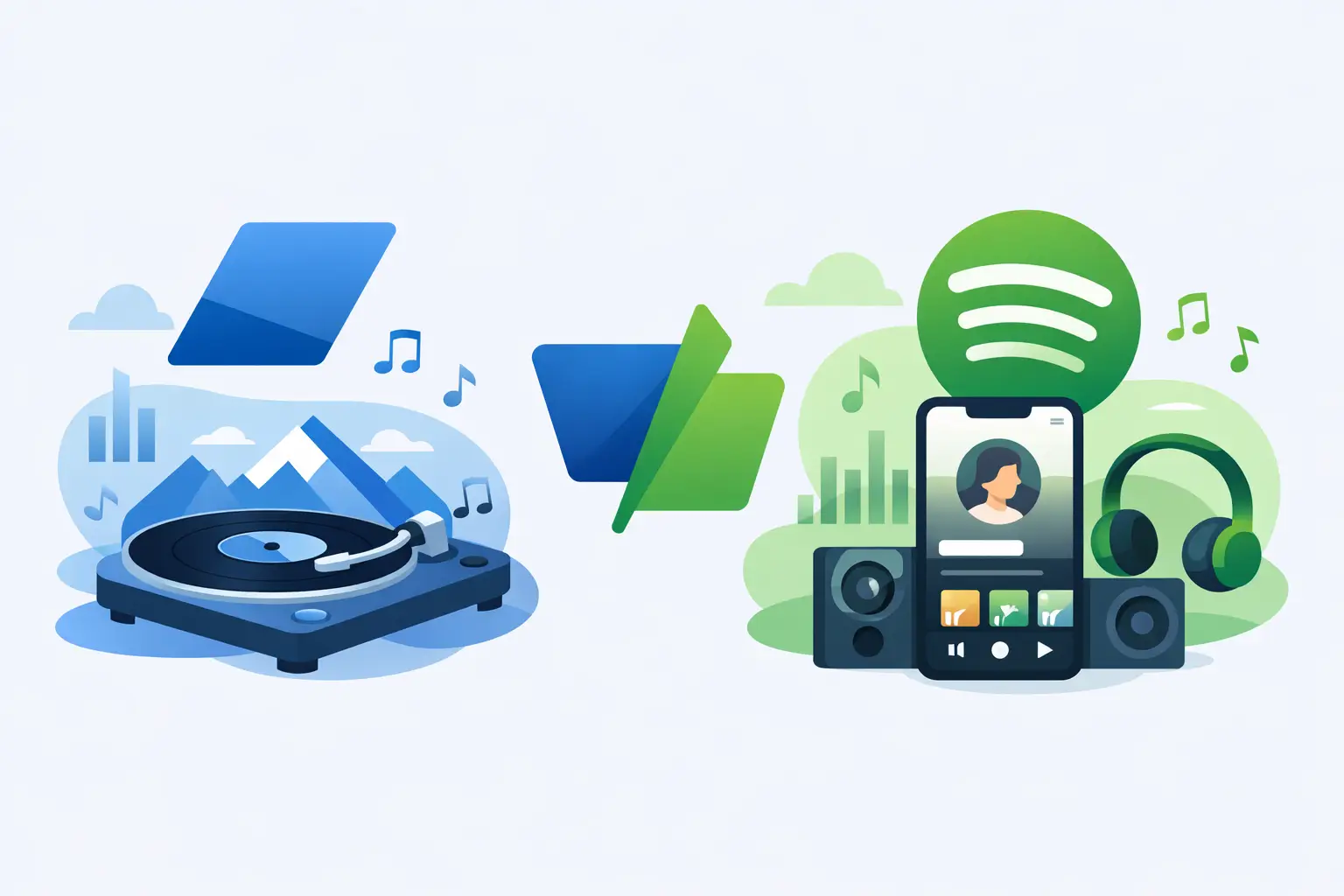
A song gets added to a playlist on Spotify and suddenly the numbers move. The same song goes up on Bandcamp and maybe the reach is smaller, but the support feels personal and immediate. That tension sits at the center of bandcamp vs spotify artists debates, especially for independent musicians who care about both audience growth and artistic longevity.
If you make original music, this is not really a question of which platform is better in the abstract. It is a question of what kind of career you are building. One platform is designed for scale, passive listening, and algorithmic discovery. The other is built around ownership, direct support, and a closer relationship between artist and listener. Both matter, but they do very different jobs.
Bandcamp vs Spotify artists: what each platform is built to do
Spotify is a streaming environment first. It is where listeners browse, follow, save, and consume music inside a massive ecosystem built around convenience. For artists, the upside is visibility. If a track lands in the right editorial lane, algorithmic radio, or user playlist flow, it can travel far beyond your current fanbase.
Bandcamp works from the opposite direction. It is not trying to turn every listener into a passive stream. It is giving artists a storefront, a profile, and a direct line to fans who are willing to spend money on music, merch, and limited releases. The listener who finds you on Bandcamp is often there because they want to support the work, not just sample it.
That difference shapes everything from earnings to branding. Spotify helps people discover you. Bandcamp helps people invest in you.
Money changes the conversation fast
Most independent artists learn this lesson the hard way. A respectable number of Spotify streams can still turn into modest income, especially if you are early in your growth. Streaming revenue depends on a complicated ecosystem of royalties, territory, subscription type, distributor terms, and your share of rights. Even when the track performs well, the payment is usually spread out over time and diluted by volume.
Bandcamp is much more direct. A fan buys an album, a single, or a shirt, and the artist gets paid from that purchase, minus platform fees and payment processing. The gap between listener action and artist revenue is much smaller. If 100 true fans buy an album, that can outperform a huge amount of casual streaming.
That does not mean Bandcamp replaces Spotify. It means the platforms monetize different levels of audience commitment. Spotify is often better at creating top-of-funnel awareness. Bandcamp is often better at converting deeper interest into meaningful support.
For serious independent artists, this is the real takeaway: streams can build momentum, but direct sales create stability.
Discovery is where Spotify still has the edge
If your goal is to get heard by people who have never seen your name before, Spotify has obvious advantages. It fits naturally into how modern listeners consume music. People move from playlists to artist radio to recommended tracks without much friction. A strong release strategy, smart metadata, compelling cover art, and good listener retention can all help your music travel.
Bandcamp discovery exists, but it is narrower and more intentional. The audience is often more engaged, but the platform is not built around casual mass exposure in the same way. People use Bandcamp to browse scenes, tags, releases, and recommendations, but discovery there tends to be slower and more community-driven.
This is where many artists make the mistake of forcing an either-or decision. Spotify is powerful for reach. Bandcamp is powerful for depth. If your music has emotional weight, album coherence, or a strong visual identity, the two can work together. Spotify can introduce the music. Bandcamp can give committed listeners a place to go next.
Bandcamp vs Spotify artists on branding and control
Independent artists do not just release songs. They build a world around the music. That includes visual identity, release framing, format, pricing, liner notes, merch, and the way listeners move from interest to commitment.
Spotify gives some branding tools, but they exist inside Spotify’s architecture. Your profile matters, your artist image matters, your release presentation matters, but you are still one name inside a giant platform. The experience is standardized by design.
Bandcamp gives you more control over how your catalog is presented. Albums can feel like complete works rather than just containers for tracks. Limited editions, bonus material, merch bundles, and pay-what-you-want pricing let you shape the relationship in a way that feels more aligned with independent artistry.
For musicians whose work is cinematic, immersive, or album-driven, that distinction matters. It lets the music live in a context that feels intentional rather than disposable. A professional recording artist with a clear sonic identity often gets more room to express that identity on Bandcamp than on a streaming profile alone.
Fan connection is not the same on both platforms
A monthly listener count can look impressive, but it does not always tell you how connected your audience really is. Many listeners on Spotify may like a song, save it, and never return to the artist page again. That is not failure. It is simply how streaming behavior works.
Bandcamp tends to attract a different kind of action. Fans purchase. They follow releases. They often read descriptions, notice artwork, and come in ready to support independent music as a practice. The interaction is more intentional.
That kind of support matters for long-term careers. It is one thing to be heard. It is another to build a fanbase that will buy a record, show up for the next release, and stay connected over time. For artists trying to create a sustainable path outside the mainstream formula, that distinction is huge.
This is why many credible indie artists treat Spotify as a discovery channel and Bandcamp as a relationship channel. One broadens the audience. The other strengthens it.
The trade-off depends on your catalog and goals
Not every artist should approach these platforms the same way. If your music is highly playlist-friendly, single-driven, and built around frequent releases, Spotify may be central to your growth. The platform rewards consistency, replay value, and discoverability. In that case, Bandcamp may play a supporting role rather than a primary one.
If your work is more album-oriented, experimental, niche, or rooted in a direct-to-fan model, Bandcamp may carry more weight. It is especially useful for artists whose listeners care about owning music, collecting physical formats, or supporting releases beyond streaming.
For many singer-songwriters, indie rock artists, and alternative musicians, the best answer lives in the middle. A track can exist on Spotify to meet listeners where they already are, while Bandcamp becomes the place where the full artistic statement is available with more context and stronger support.
That hybrid model often feels more honest because it reflects how people actually engage with music. Some fans stream everything. Some still buy albums. Some do both.
What independent artists should prioritize
The platform choice matters, but strategy matters more. If you are only chasing streams, you may build visibility without much ownership. If you only focus on direct sales, you may limit discoverability before your audience has room to grow.
A stronger approach is to decide what each platform is supposed to do for you. Spotify can function as the public stage – accessible, searchable, and ready for discovery. Bandcamp can function as the artist’s home base for higher-intent fans who want more than background listening.
That means your release plan should reflect real goals. If the priority is audience growth, then optimize your Spotify presence with strong release cadence, polished assets, and music that holds attention. If the priority is fan support, then use Bandcamp with purpose – offer complete releases, thoughtful presentation, and reasons for listeners to step closer.
Artists with a clear identity tend to do better on both platforms because the music itself gives people something to remember. Originality still matters. So does consistency. A listener might first hear a track in a playlist, then decide to buy the album because the work feels timeless, personal, and worth keeping. That is where an independent career starts to gain real shape.
For an artist brand built on emotional depth and distinctive sound, this balance is especially valuable. It is one reason independent musicians like Nick Duane Music can use streaming for visibility while still honoring the direct connection that turns casual listeners into lasting supporters.
So which platform wins?
If the question is reach, Spotify usually wins. If the question is revenue per committed fan, Bandcamp usually wins. If the question is artistic control, Bandcamp has the stronger case. If the question is mainstream listener behavior, Spotify is still the dominant environment.
But careers are not built on a single metric. The best platform is the one that fits the role you need it to play right now, while still supporting the artist you want to become next.
A stream can open the door. A direct purchase can keep the lights on. The smart move is not choosing one side of the argument forever. It is building a path where discovery leads to connection, and connection leads to staying power.