
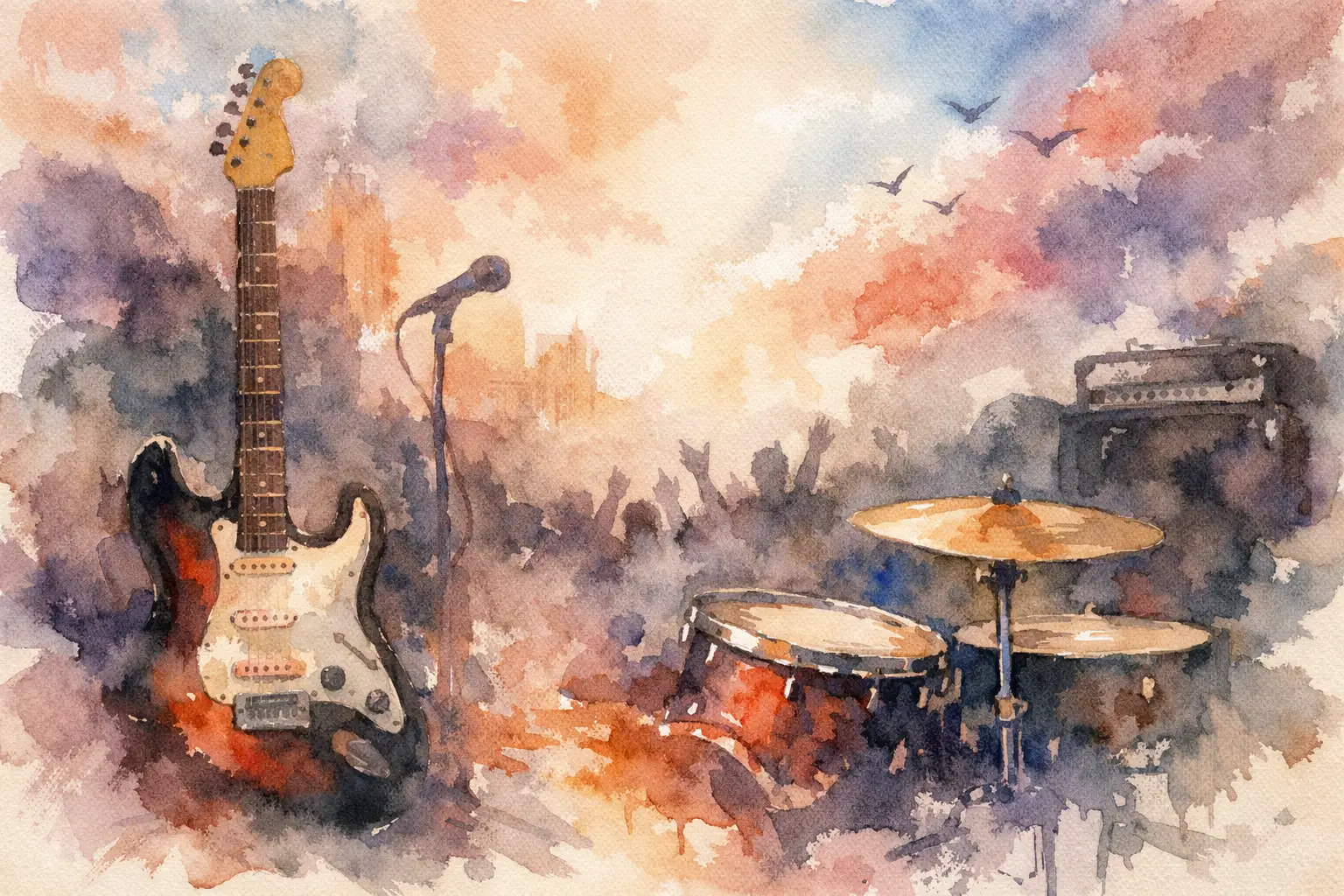
A great alternative song usually gives itself away in the first few seconds. Maybe it is a guitar tone that feels slightly damaged but intentional. Maybe it is a vocal that sounds too human to be polished flat. Maybe it is the tension between melody and noise. Those details point back to the same source – alternative rock influences that changed how artists write, record, and define themselves.
For listeners who care about more than playlists and passing trends, those influences still matter because they continue to shape the records worth returning to. Alternative rock was never one sound. It was a mindset built around contrast: raw emotion against craft, underground instinct against major-label reach, classic songwriting against left-field production. That tension is still all over the strongest indie and alternative releases now.
Why alternative rock influences still carry weight
Alternative rock did not rise because it followed a formula. It gained power because it made room for contradiction. Bands could be melodic without sounding soft, aggressive without becoming one-dimensional, and experimental without losing the audience completely. That flexibility is one reason its influence has lasted longer than many of the scenes that tried to replace it.
Another reason is that alternative rock rewarded identity. It allowed artists to sound imperfect, distinct, and even a little difficult. In a music culture that often pushes clean surfaces and immediate gratification, that legacy remains valuable. Listeners who spend time with full albums tend to recognize the difference between music built for a moment and music built with a point of view.
You can hear that difference in modern records that blend emotional directness with atmosphere, or in artists who pair singer-songwriter structure with heavier textures and cinematic space. The best work in that lane does not imitate the past. It absorbs it.
The core alternative rock influences behind the sound
Punk urgency and post-punk restraint
A large part of alternative rock’s DNA comes from punk, but not only from speed or aggression. Punk contributed urgency, clarity, and a distrust of excess. Songs got to the point faster. Lyrics felt less decorative. Performance mattered as much as perfection.
Post-punk complicated that energy in a useful way. It introduced mood, repetition, angular rhythm, and a colder sense of space. Instead of treating guitars only as blunt-force instruments, post-punk turned them into tools for tension and texture. That shift is still central to modern alternative music, especially when artists want emotional impact without relying on obvious hooks.
College rock and indie credibility
College rock helped define what many listeners still mean when they talk about alternative authenticity. It prized smart songwriting, regional scenes, and artists who developed followings because the music connected, not because it was built for mass appeal first. The influence here is not just sonic. It is structural.
That legacy lives on in how independent artists build careers now. The path might run through streaming platforms instead of campus radio, but the principle is familiar: make records with identity, build trust over time, and let the audience grow around the work. For serious listeners, credibility still comes from consistency and artistic character.
Grunge and the return of weight
Grunge brought physical force back into rock, but its deeper influence was emotional honesty. Under the distortion and volume, many of those songs were brutally vulnerable. They turned alienation, frustration, and self-doubt into something melodic enough to stay with people.
That combination still matters because heavy music without feeling can become generic fast. Grunge proved that loud guitars hit harder when the writing underneath them is exposed and personal. You still hear that lesson in modern alternative artists who let dynamic shifts carry the emotion rather than stacking everything at the same intensity.
Shoegaze and sonic immersion
Shoegaze changed how alternative music could feel in the body. Instead of always driving forward, it created environments – wide, blurred, and emotionally immersive. Vocals became part of the texture. Guitars became atmosphere as much as riff. The production itself started telling part of the story.
This influence shows up everywhere now, from dreamier indie rock to cinematic singer-songwriter records. The trade-off is that atmosphere can either deepen a song or hide its lack of structure. When it works, shoegaze influence gives a track depth and gravity. When it does not, it just sounds washed out. The difference is always in the writing.
How alternative rock influences shaped songwriting
One of the strongest gifts alternative rock gave modern music is the idea that songs do not need to resolve too neatly. Choruses can lift without becoming sugary. Verses can stay conversational. Bridges can destabilize the mood instead of tying it up.
That approach opened the door for more emotionally believable songwriting. Life rarely lands on a perfect cadence, and alternative rock often reflects that. It allows ambiguity. It leaves certain lines unresolved. It trusts the listener to stay engaged without being spoon-fed every emotional cue.
It also broadened the acceptable subject matter. Instead of centering only romance or rebellion in the obvious sense, alternative songwriting made room for anxiety, memory, spiritual drift, urban dislocation, private grief, and strange flashes of hope. Those themes are still central to many of the most compelling independent releases.
Production choices that came from alternative rock
If classic rock often aimed for fullness and pop aimed for immediate clarity, alternative rock made room for friction. That may be the most lasting production influence of all.
Distortion stopped being just a sign of intensity and became a color. Room noise could stay in. Vocals could sit inside the band instead of floating above it. Drums could sound dry and intimate or huge and unstable depending on the emotional need of the track. Imperfection became part of the aesthetic language.
This is where alternative rock influences remain especially relevant for independent artists. Modern recording tools make almost anything possible, but possibility is not the same as taste. Alternative production traditions remind artists that sonic choices should reveal character, not erase it. A pristine mix can work. A rougher one can work too. What matters is whether the production serves the emotional architecture of the song.
That balance is part of what gives certain records longevity. They do not sound trend-chased. They sound chosen.
Alternative rock influences in modern indie artists
Many current artists carry alternative rock forward without sounding retro. You hear it in the way guitars are layered for mood rather than simple power. You hear it in vocals that keep a human edge. You hear it in albums that still care about sequence, pacing, and atmosphere.
There is also a clear crossover with cinematic production and singer-songwriter intimacy. That combination fits audiences who want emotional immersion but still need memorable songs at the center. It is one reason artists with strong individual identity continue to stand out. The audience for this music is not just looking for a sound. They are looking for a world.
For an independent artist brand like Nick Duane Music, that lineage makes sense. A catalog built on indie rock, alternative textures, and emotionally driven vocals is part of the same tradition that values mood, melody, and artistic independence in equal measure.
What listeners respond to now
Listeners today have more access than ever, but attention is harder to earn. That changes how alternative influence functions. It is no longer enough to reference the right era or wear the right textures. Audiences can hear past imitation quickly.
What still connects is conviction. A song shaped by alternative rock influences works when it sounds lived in, not borrowed. That may mean a chorus that resists easy polish. It may mean a production choice that leaves some edges exposed. It may mean an album that values atmosphere and pacing over algorithm-friendly sameness.
There is a practical trade-off here. Music with stronger identity may ask more from the listener on first contact. It may not reveal everything in fifteen seconds. But it also has a better chance of lasting. For serious fans, that is usually the better deal.
Why these influences are not going away
Alternative rock never belonged to one decade because its real legacy is creative permission. It gave artists space to blend beauty with abrasion, introspection with force, and craftsmanship with risk. That remains useful in every era, especially for musicians who would rather build a body of work than chase a passing spike.
The strongest records still carry that spirit forward. They respect melody but are not trapped by prettiness. They value production but do not hide behind it. They sound personal because they are built from choices that mean something.
That is why alternative rock influences still matter. Not as museum pieces, and not as nostalgia bait, but as living tools for making music with personality, tension, and staying power.
If you are the kind of listener who still plays full albums from front to back, you already know the feeling when a song has real character. It stays with you because it was made from conviction, and conviction never goes out of style.