
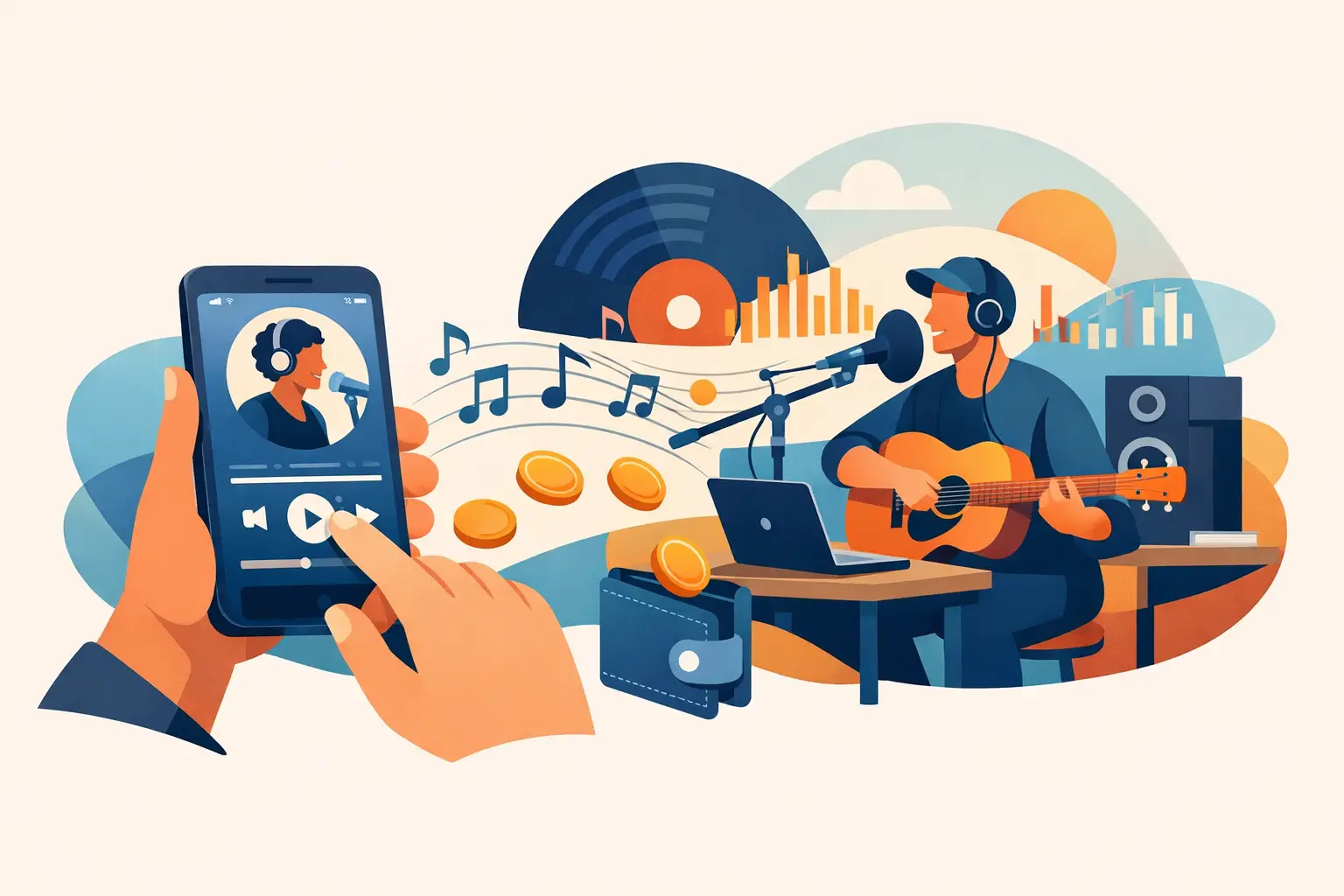
A stream can introduce you to a song. A purchase says something more lasting: this music deserves a place in your life. That is the real answer to why buy music from artists. It is not simply a transaction for a file, a download, or a record. It is a direct vote for the kind of music you want more of – music made with identity, patience, and a point of view.
For listeners who care about indie rock, alternative textures, cinematic arrangements, and songwriting that holds up beyond a passing mood, buying music is one of the clearest ways to support the work behind the sound.
Why Buy Music From Artists Instead of Only Streaming?
Streaming is useful. It makes discovery immediate, lets listeners follow a new release in seconds, and gives independent artists a way to reach people far beyond their hometown. For a professional recording artist, being heard on major platforms still matters.
But a stream and a sale do not carry the same weight. Streaming income is typically built on a huge volume of plays, divided across platform systems, distributors, rights holders, and other layers of the music business. A direct purchase gives more of its value to the person who wrote, performed, recorded, and released the work.
That difference matters most for independent musicians. An artist working outside a major-label machine may be funding studio time, mixing, mastering, visual production, equipment, distribution, and promotion from the income the music itself creates. Buying an album or song helps turn the next creative decision into a real possibility rather than a compromise.
It also changes the relationship between listener and artist. A stream can be casual. A purchase is intentional. It tells an artist that the music landed somewhere meaningful, that a lyric, vocal, guitar line, or atmosphere stayed with someone after the song ended.
A Purchase Supports the Parts You Do Not See
The finished track is only the surface. Behind a three- or four-minute song may be months of writing, revision, rehearsal, recording, and production choices that most listeners never see.
A songwriter may try five different choruses before finding the one that feels inevitable. A vocal performance may need to be rebuilt line by line to carry the right emotion without losing its human edge. A producer may spend days shaping drums, guitars, synths, and room sound until the track has depth instead of just volume.
That work is especially central in music that does not follow a mainstream formula. Original compositions often take longer because the goal is not to imitate whatever is already performing well. The goal is to create a world of its own: a melody with staying power, a lyric that leaves room for the listener, and a production that reveals more with repeated plays.
When you buy directly from an artist, you help preserve that freedom. You are not asking the music to become safer, shorter, louder, or more disposable. You are helping make room for the artist to follow the song where it needs to go.
Creative Independence Has a Real Cost
Independent does not mean amateur. It often means the artist is carrying more responsibility: writing the material, overseeing recordings, making release decisions, handling distribution, building an audience, and maintaining a professional standard from the first demo to the final master.
That freedom has a trade-off. Without major-label budgets, every release requires careful choices. Should the artist book another day in the studio? Hire a mixing engineer? Press physical copies? Invest in video, artwork, or a better live setup? Those decisions affect how fully the music can be realized.
Direct sales make that independent path more sustainable. They give artists a better chance to build a catalog over time instead of chasing a single moment of attention. For listeners, that can mean more thoughtful albums, stronger follow-up releases, and a body of work with real continuity.
This is where artist support becomes more than a slogan. The money from one purchase may not transform a career overnight, but accumulated support creates momentum. It pays for the next session, the next release, and the time required to make something worth returning to.
Owning Music Creates a Different Listening Experience
There is also a personal reason to buy music: ownership changes how you listen.
A purchased album is not competing in an endless feed of recommendations. You chose it. You can keep it, return to it, play it in sequence, and hear the transitions that disappear when every song is treated as a standalone fragment. For album-oriented listeners, that matters. The opening track, the quieter middle passage, and the final resolution are often part of the same emotional design.
Digital purchases are practical because they can live in your own collection and travel with you across devices. Physical formats offer another kind of connection: artwork, lyrics, credits, and the simple ritual of putting a record or CD on without a screen asking for the next click.
Neither format is automatically better. Some fans want the convenience of a digital album; others want a physical edition they can hold onto for years. What matters is choosing a form that lets the music remain accessible on your terms.
You Are Supporting a Catalog, Not Just a Track
Songs do not arrive in isolation. They come from an artist’s history, influences, risks, abandoned ideas, previous bands, live performances, and the long process of learning how to say something distinct.
Buying music recognizes that larger story. It supports the catalog rather than only rewarding the most algorithm-friendly song. That is particularly valuable for artists whose work moves between rock energy, atmospheric production, intimate vocals, and cinematic mood. The complete picture may take more than one listen – or more than one album – to reveal itself.
Nick Duane Music is built around that kind of long-view artistry: original music shaped by classic rock instinct, alternative color, and forward-looking production. Direct support helps independent artists keep developing that voice without sanding down the edges that make it recognizable.
For listeners, the reward is discovery with depth. You may find that the song you first came for is only the doorway. The album track you nearly skipped, the lyric that becomes more personal over time, or the instrumental detail heard on the tenth play may become the reason you stay.
Buying Music Keeps Fan Support Human
Music platforms can make listening feel abstract. Numbers rise, playlists update, and songs become data points in a vast system. Direct purchases restore some humanity to the exchange.
An artist sees that someone chose to support the work. A listener knows their money did more than briefly register as a fraction of a play. That connection can lead to a more engaged music community, where people pay attention to releases, share songs because they mean something, and show up for the artists they want to see continue.
This does not mean streaming is the enemy. Streaming is where many great listening relationships begin. It is a strong way to explore an artist’s sound before committing to an album. The better approach is to let streaming handle discovery and let purchases mark the music you want to keep close.
If a record has earned repeat plays, made a long drive feel different, or put words to something you could not quite articulate, consider giving it a permanent place in your collection. That small decision helps make the next honest, ambitious song possible.