
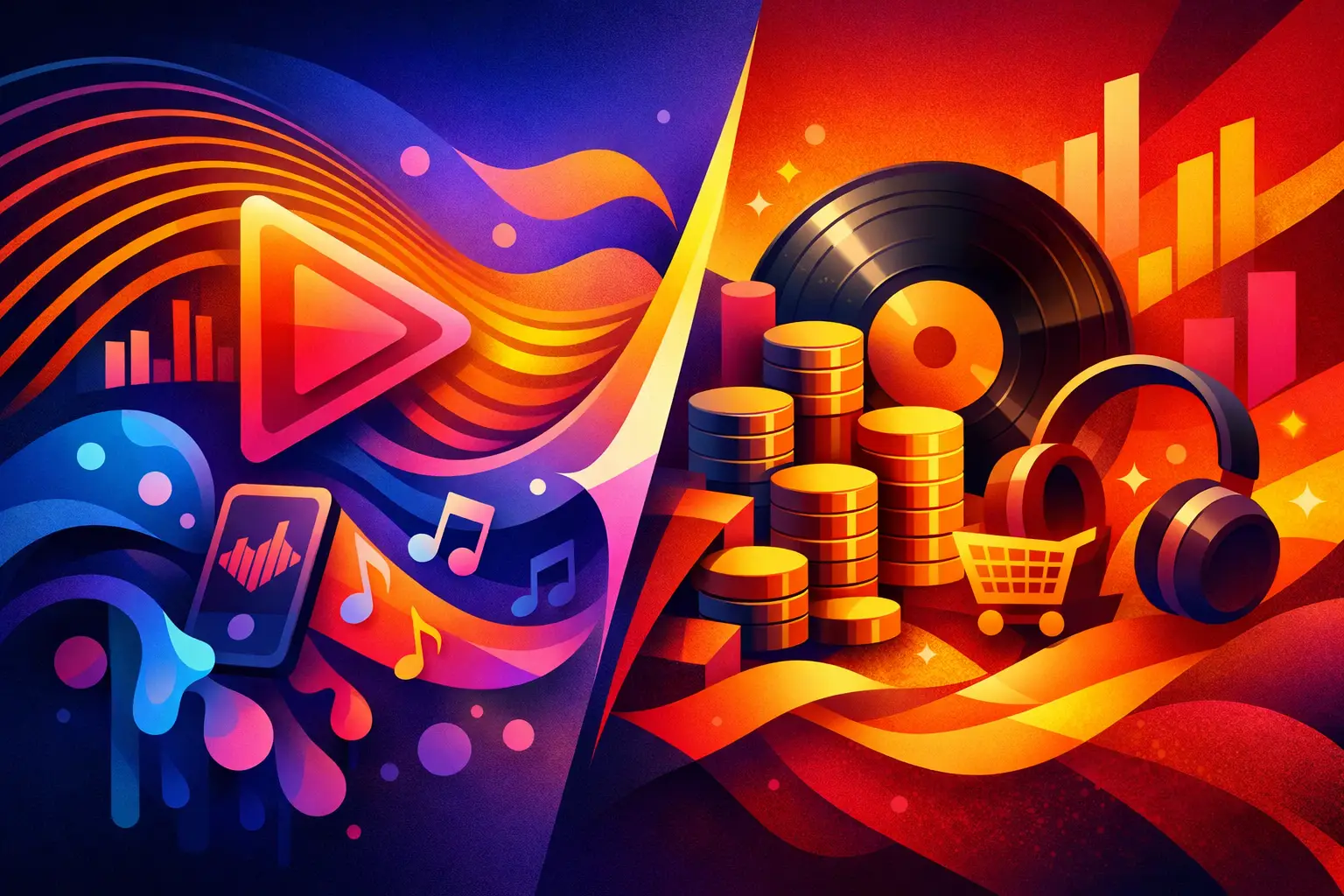
A single stream is easy. A direct purchase is intentional. That is the real tension in streaming vs direct music sales, and for independent artists, it affects everything from income to audience loyalty to how a catalog holds its value over time.
For listeners, streaming feels natural because it puts millions of songs a tap away. For artists, it offers reach, visibility, and a chance to be discovered by people who would never have found the music otherwise. But direct sales tell a different story. When someone buys a track or album outright, they are not just listening. They are making a clear decision to support the work, the artist, and the long arc of an independent career.
Streaming vs Direct Music Sales: What Changes for the Artist?
The simplest difference is this: streaming is access, while direct sales are ownership. That distinction sounds technical, but it has real consequences.
Streaming platforms are built for scale. They help artists appear in searches, playlists, algorithmic recommendations, and genre ecosystems where new listeners are already browsing. For an indie artist with a distinct sound, that matters. A cinematic alternative track can land in front of someone who likes textured rock or emotionally driven songwriting, even if they have never heard the artist’s name before.
Direct sales work differently. They usually happen after interest already exists. A listener hears a song, connects with it, and decides the music is worth paying for directly. That kind of action carries more weight. It often signals a deeper relationship, one built on trust, artistic identity, and the feeling that this music deserves a place beyond a passive playlist.
Neither model is inherently better in every situation. Streaming is better at opening doors. Direct sales are better at turning attention into commitment.
Why Streaming Still Matters
It is easy to criticize streaming based on payout alone, but that misses the full picture. Streaming remains one of the most effective discovery engines in modern music.
For independent artists, reach is not a side issue. It is survival. A strong song on a major platform can introduce the catalog to new listeners across cities, countries, and scenes without requiring a traditional gatekeeper. That reach can grow monthly listeners, build familiarity, and create momentum around releases.
Streaming also matches how people consume music now. Many listeners want immediate access across devices, playlists for every mood, and the ability to try an artist before making a purchase. If your music is not available where those listeners already spend their time, you are asking them to change their habits before they even know whether they connect with the songs.
That is a high barrier.
For a serious independent artist, streaming is often the front door. It lets the music speak first. It lowers friction. It makes discovery possible at scale.
There is also a branding effect. A polished presence on major streaming platforms signals legitimacy. It shows that the catalog is active, current, and professionally presented. For fans discovering a new artist, that matters more than people admit.
Where Streaming Falls Short
The weakness of streaming is not mystery. It is math.
Most independent artists need a large volume of streams to generate meaningful revenue. Even when the music is strong and the audience is real, the earnings from casual listening can remain modest. That can be frustrating when a song takes months to write, record, and refine.
There is also the issue of context. On streaming platforms, songs often live beside everything else. They compete with endless releases, shortened attention spans, and playlist behavior that favors mood over authorship. Some listeners may love a track without ever learning who made it. Others may stream a song repeatedly but never move deeper into the catalog.
That creates a strange imbalance. The music is being heard, but the artist-fan connection can stay thin.
For musicians who care about artistic longevity, that limitation matters. A catalog should not exist only as background audio. It should have identity, narrative, and a home base where listeners can engage beyond the algorithm.
Why Direct Music Sales Still Matter
Direct sales do something streaming cannot. They create a cleaner exchange between artist and listener.
When a fan buys music directly, the value of the work becomes visible. The purchase is not diluted across a platform economy. It is a direct statement that the songs matter enough to own, revisit, and support in a tangible way.
That has financial value, of course. One album sale can outperform a large number of streams. But the deeper value is relational. Direct buyers are often the listeners who stay. They are more likely to follow new releases, explore older records, and pay attention to the artist’s broader body of work.
For independent artists with a clearly defined sound, direct sales also preserve the album as an artistic format. That matters for music built around mood, atmosphere, sequencing, and emotional arc. Not every record is meant to be fragmented into detached singles. Some albums are designed to unfold.
A direct purchase respects that intention.
It also gives artists more control over presentation. Instead of surrendering every interaction to platform design, the artist can frame the music in a way that reflects the work itself. Artwork, track order, release story, and the overall listening experience all carry more meaning when the artist controls the environment.
Streaming vs Direct Music Sales for Fans
From the fan’s side, this is not just about payment models. It is about how people choose to relate to music.
Streaming is perfect for discovery, convenience, and daily listening habits. It helps fans explore widely and revisit favorites without friction. For many people, it is the easiest way to keep up with new music and build a listening routine around it.
Direct purchases serve a different instinct. They appeal to listeners who want a more active relationship with the artists they admire. Buying an album is a way of saying this one stays with me. It is support, but it is also curation. It reflects taste, memory, and a personal bond with the music.
That is especially true in indie and alternative circles, where listeners often care about more than a catchy chorus. They care about voice, atmosphere, artistic intent, and whether the music feels original. When fans find something that cuts deeper than the disposable cycle, they often want a way to support it more directly.
The Smartest Strategy Is Usually Both
For most independent artists, the real answer to streaming vs direct music sales is not either-or. It is sequencing.
Streaming brings people in. Direct sales give them a way to go further.
That approach respects the realities of modern listening while protecting the long-term value of the music. It allows casual listeners to discover the songs naturally, then gives committed fans a place to support the artist in a more meaningful way.
This is where artist identity matters. If the music has a clear point of view, a professional presentation, and emotional depth, some listeners will want more than passive access. They will want the full release, the deeper catalog, the closer connection. An independent artist like Nick Duane Music benefits from both channels because the audience is not just chasing trends. They are responding to originality, craft, and a sound built to last longer than a playlist cycle.
That said, balance matters. If an artist leans only on streaming, they may gain reach without building enough direct support. If they focus only on sales, they may protect value but limit discovery. The strongest independent model uses streaming for visibility and direct sales for durability.
What This Means for a Long-Term Music Career
A career is not built on one metric. Not streams alone. Not sales alone.
A real career grows when discovery, trust, and support reinforce each other. Streaming helps songs travel. Direct sales help the artist remain sustainable. One expands the audience. The other strengthens the bond.
For listeners who care about independent music, this balance matters too. The artists making original work outside mainstream formulas need both attention and direct backing. Streams keep the music in motion. Purchases help keep the artist creating.
That is why the conversation matters beyond industry numbers. It asks a bigger question: how do we want music to live in our lives? As endless access with low commitment, or as art we choose to carry with us?
The best answer is often both, used with intention. Stream the music that moves you. When an artist truly earns a place in your world, buy the record and make that support count.